
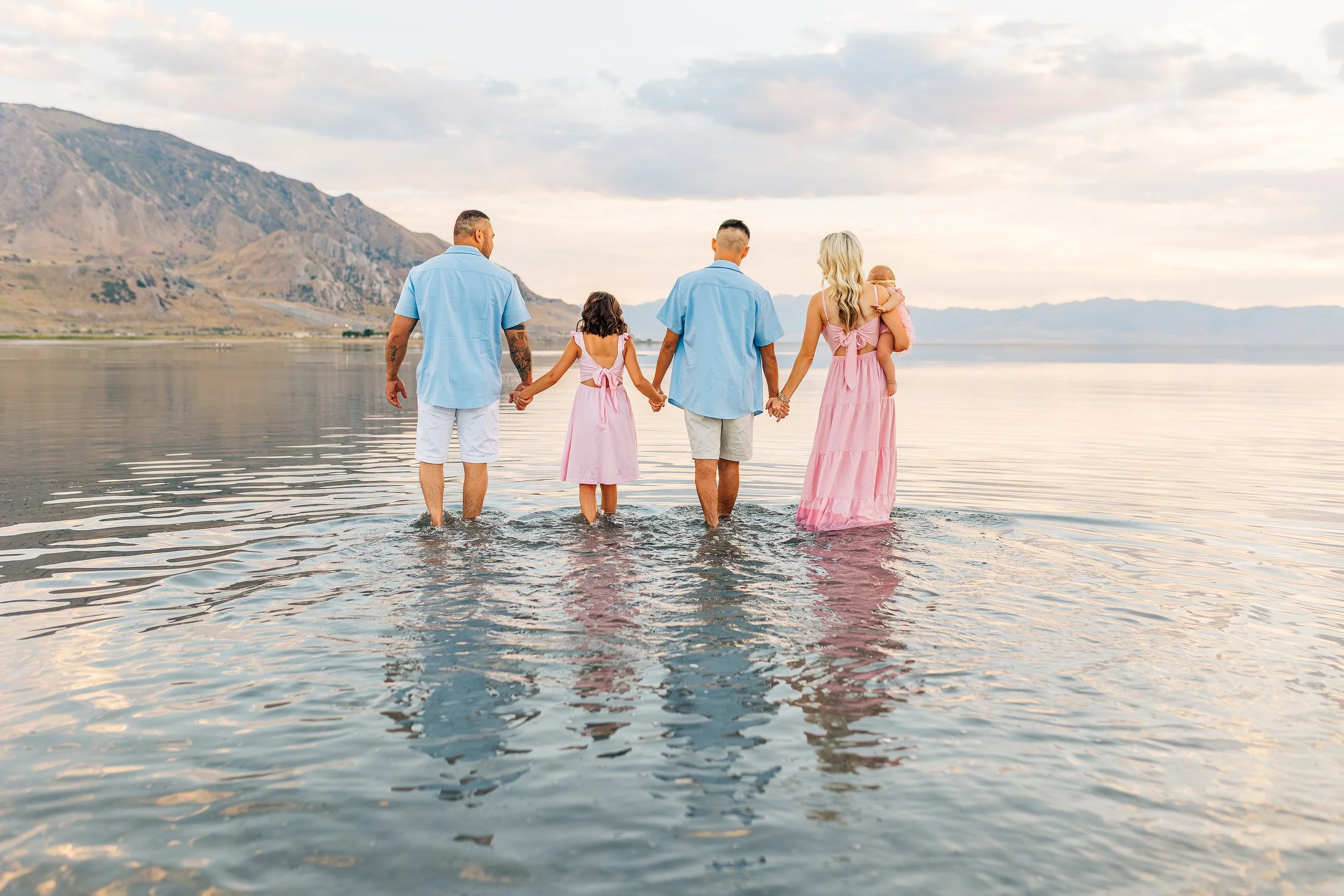
Client Privacy in Family Photography: Why It Matters More Than Ever
Client privacy in family photography matters more than ever. As a documentary family photographer in Salt Lake, Davis, and Weber County, I believe families deserve beautiful images and thoughtful boundaries, without pressure to share online.
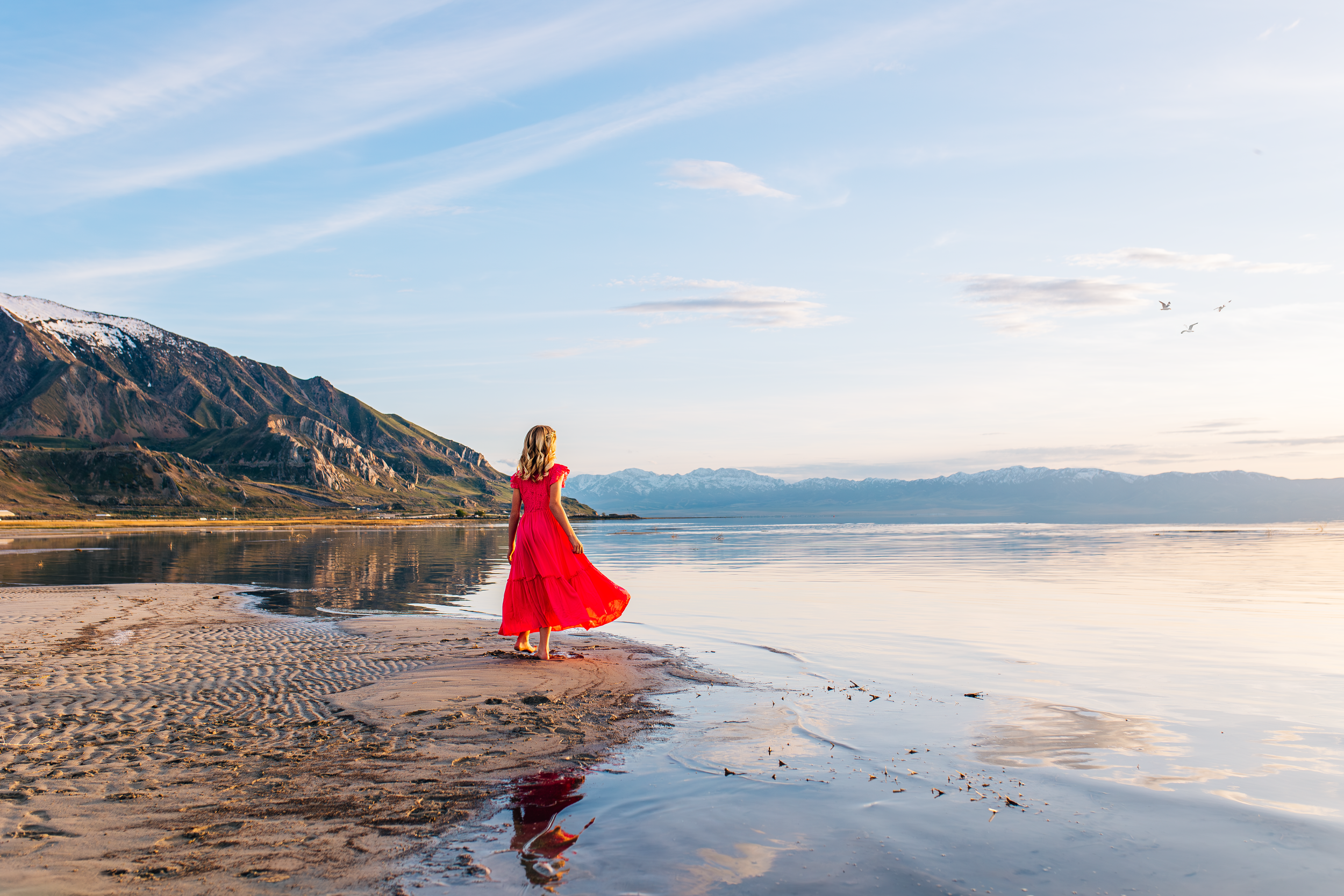
You don’t need faces to tell a story. Documentary-style photography at the Great Salt Lake allows families to preserve emotion while protecting privacy.
As a family photographer in Utah, I have always loved sharing the beautiful moments I capture. A genuine laugh. Wind in a toddler’s hair at the Great Salt Lake. A quiet forehead kiss during golden hour. These images are powerful. They tell stories. They connect people.
Documentary family photography is about preserving real life as it unfolds. But over the past few years, the digital world has changed quickly. The way images are stored, shared, scraped, and even manipulated has evolved. That shift has made me think more intentionally about client privacy in family photography.
I want to be clear about something.
This is not a judgment of parents who are comfortable sharing photos of their kids online. Every family makes decisions based on their own comfort level, values, and boundaries. I respect that completely.
For me, this conversation comes from a place of responsibility. From wanting to protect the families who trust me as their family photographer. From recognizing that child privacy in photography matters more than ever in a world where images travel far beyond their original intention.
This is not about fear.
It is about intention.

Connection matters more than perfect smiles. Documentary-style family photography in Davis County, Utah focused on real emotion and natural moments.
The Reality of Photography and Online Privacy
When you hire a family photographer, you are trusting them with something deeply personal. Your children. Your relationship. Your home. Your memories. For a long time, sharing images online felt harmless. Social media was simply a way to show work, connect with others, and celebrate families.
Today, things are more complicated.
Images can be downloaded, altered, used in ways we never intended, or fed into artificial intelligence systems without consent. Even when photographers watermark images or adjust privacy settings, the internet is not a controlled environment.
This is not about assuming the worst. It is about understanding how digital sharing works now.
As both a parent and a family photographer in Utah, that reality matters to me. I respect that every family has a different comfort level when it comes to sharing photos of their children online. Some families love sharing milestones and memories publicly. Others prefer more privacy. There is no single right approach.
For me, thinking about client privacy in family photography is about responsibility. It is about making sure the families I photograph feel safe, respected, and in control of how their images are used.
Photography will always be about preserving connection. But preserving connection does not require exposing every detail of your family to the internet.
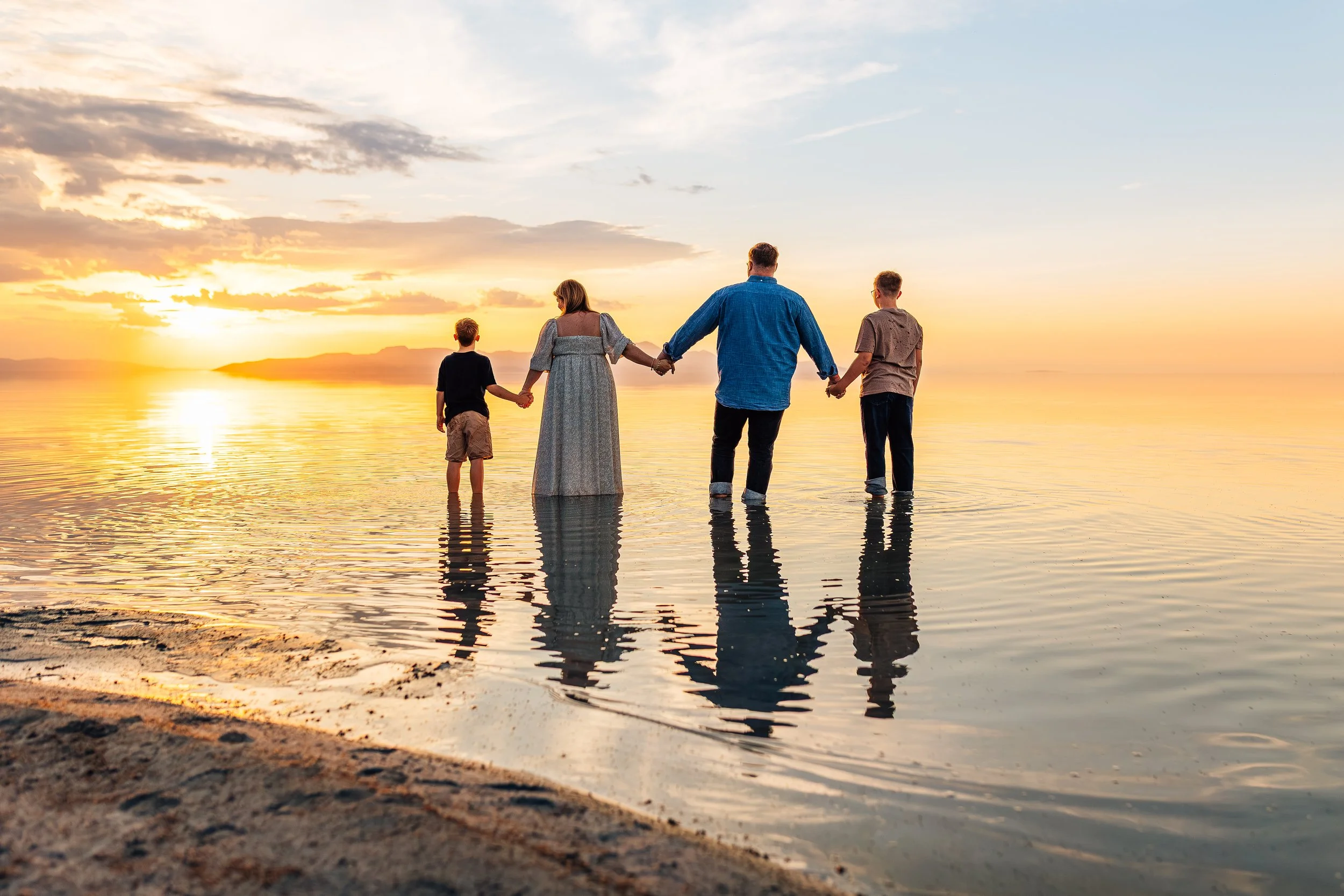
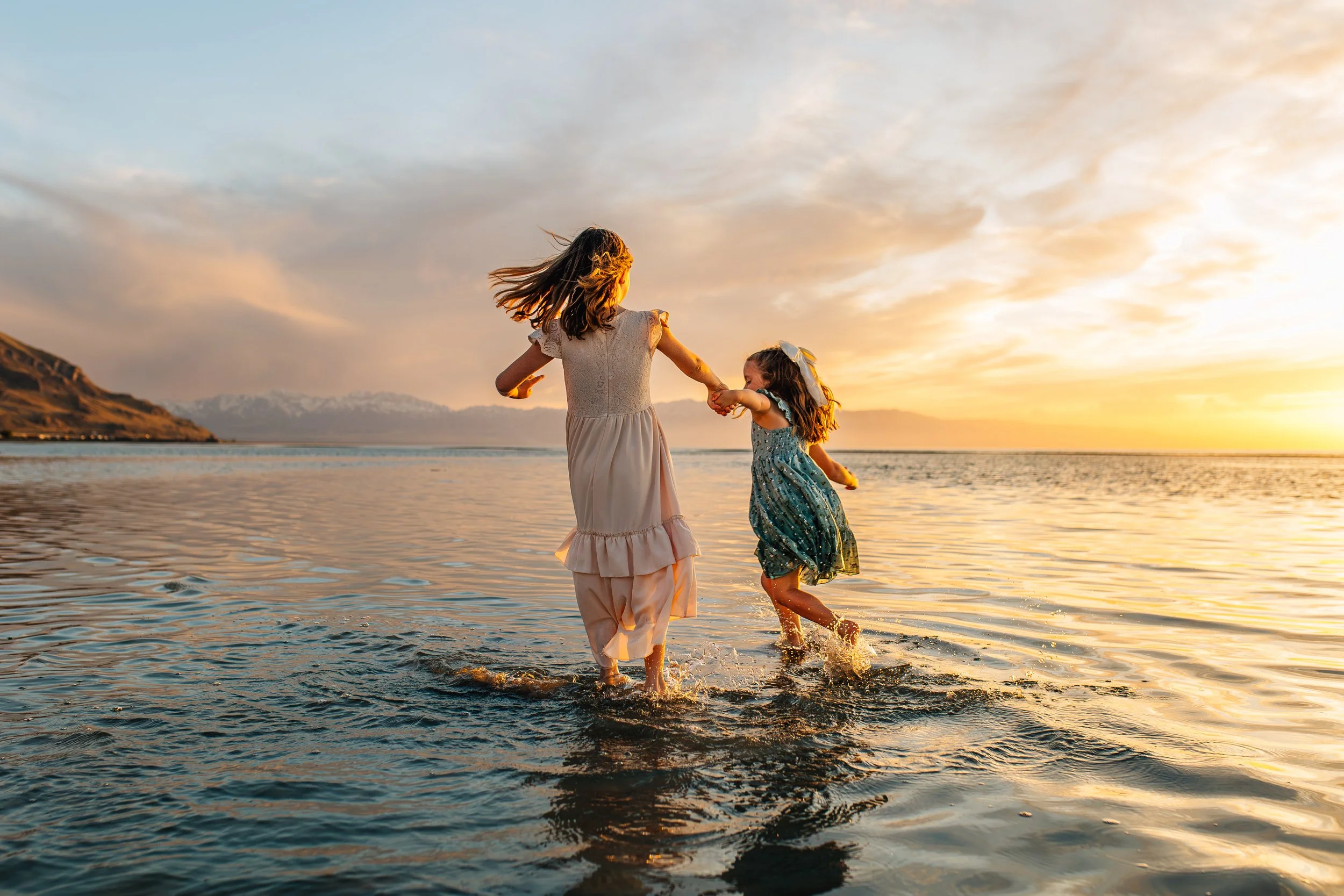
Documentary-style family photography at the Great Salt Lake in Salt Lake County, Utah. Golden hour, real connection, no forced poses.
My Approach to Client Privacy
As a Utah family photographer, I believe client privacy should always be intentional and transparent.
I offer clear options when it comes to sharing images. Some families are comfortable with full social media use. Others prefer limited sharing. And some choose complete privacy.
All of those choices are valid.
There is no pressure to sign a broad media release. Your comfort matters more than my portfolio. If you prefer that your family photography session remain private, I honor that fully.
In recent years, I have also leaned more into what many call faceless or anonymous family photography. These are images that focus on movement, silhouettes, hands intertwined, laughter from behind, or the way light wraps around a family without revealing every identifying detail.
This approach allows families to preserve connection and storytelling while maintaining digital privacy.
Often, those images are some of the most cinematic and emotionally powerful. They center on feeling rather than exposure.
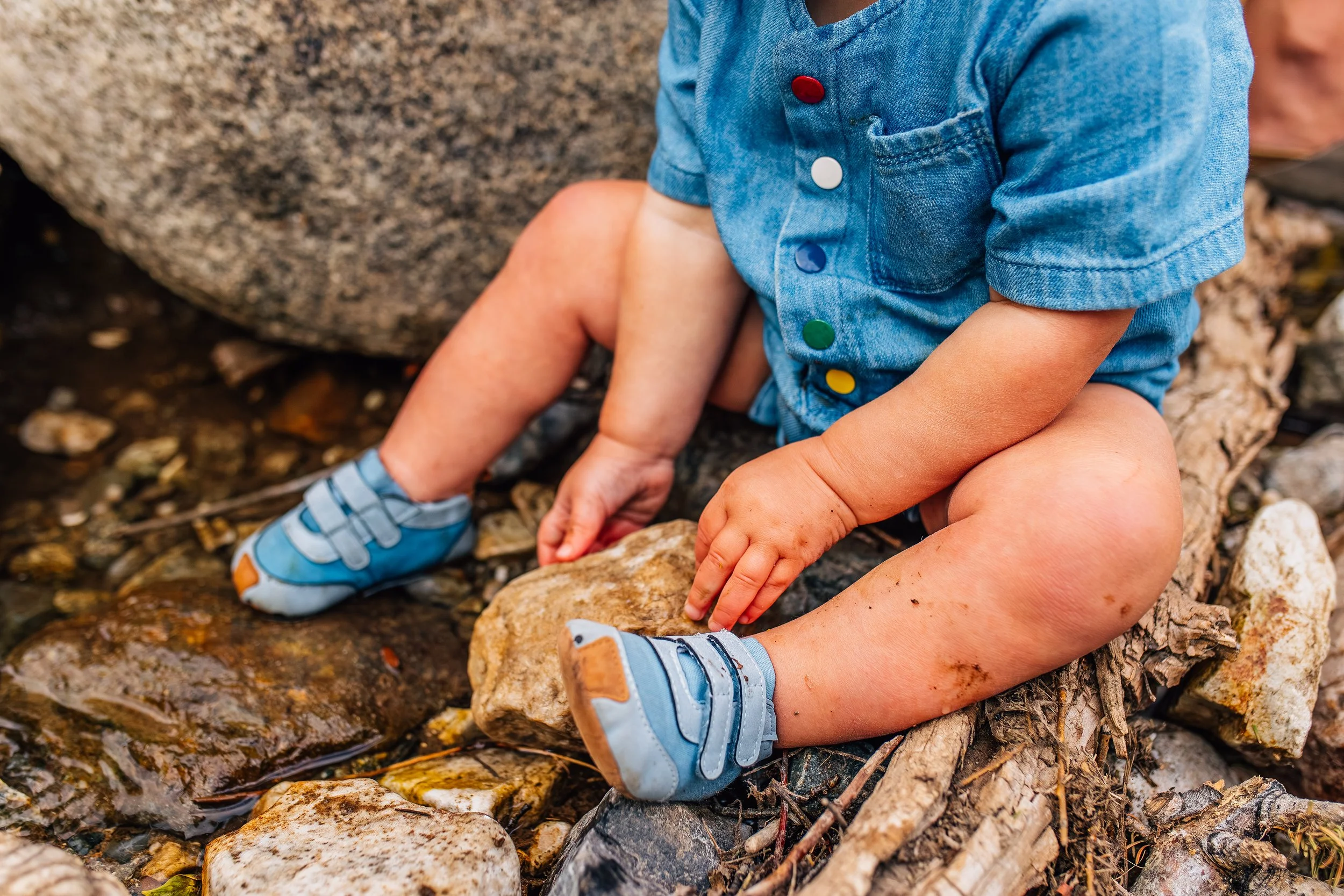
Documentary-style child photography in Weber County, Utah focused on real outdoor moments and natural play.
Why Faceless Work Can Be Powerful
Documentary family photography is rooted in storytelling, not perfection. As a Utah family photographer, I focus on real connection over posed eye contact. Storytelling does not always require faces turned toward the camera.
Some of the most meaningful moments happen from behind. A child reaching up to hold a parent’s hand. Siblings walking toward the water at sunset. A couple standing in soft backlight with only their outlines visible.
This is what many refer to as faceless family photography or anonymous family photography. It centers on movement, light, and connection rather than identity.
These images protect client privacy while still preserving emotion and story.
They feel timeless. They feel intimate. They feel safe.
And in today’s digital world, that safety matters.
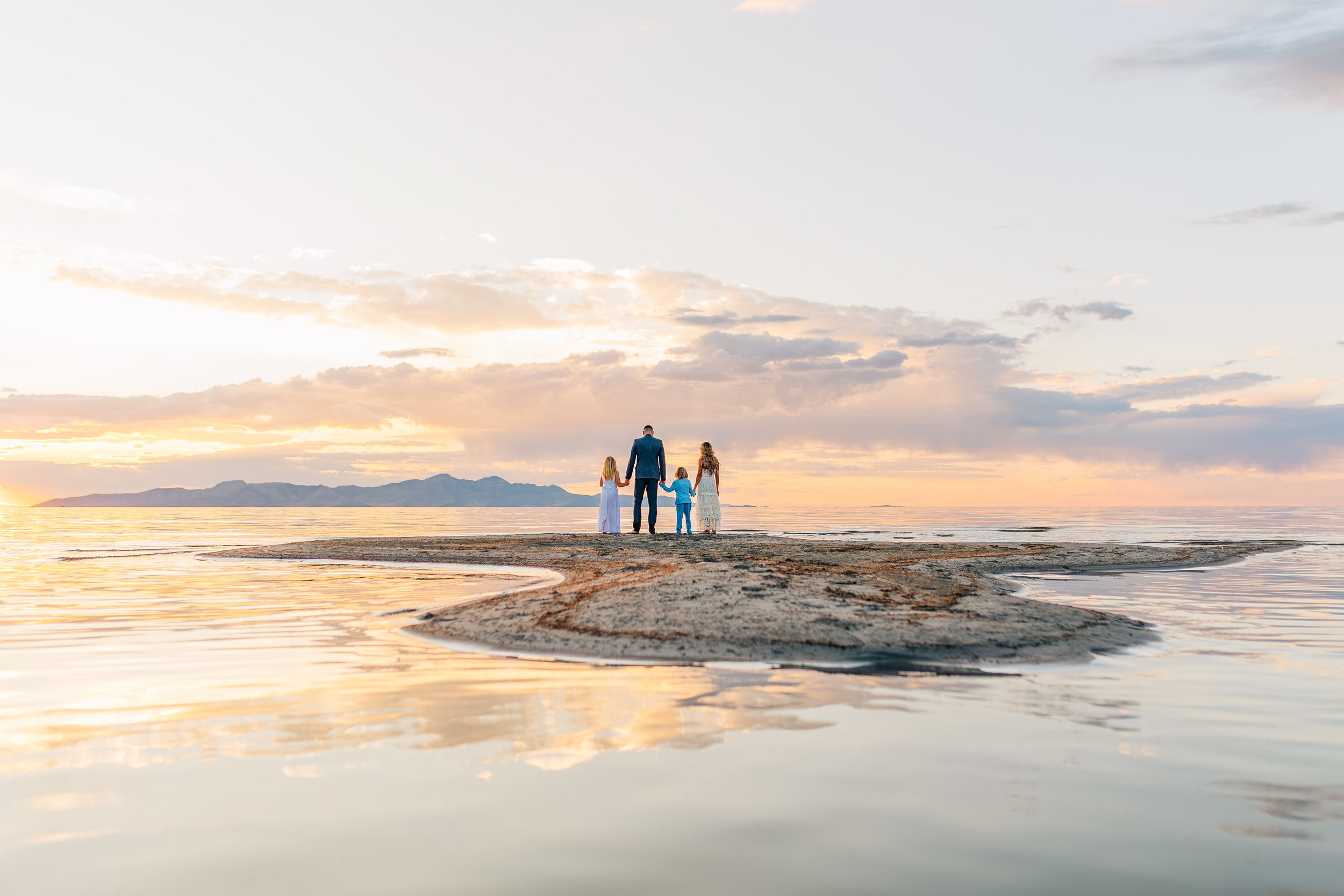
Sunset family photography at the Great Salt Lake in Salt Lake County, Utah. Wide open skies, real moments, no forced poses.
Photography, Responsibility, and Trust
Client privacy in family photography is not about secrecy. It is about respect.
If you prefer not to have your children’s faces shared publicly, I understand that. If you are comfortable with full social media sharing, I respect that too. There is no right or wrong approach when it comes to sharing photos of your family online.
As a Salt Lake County family photographer serving Weber and Davis County, my goal is to create meaningful, documentary family photography that honors your story without exploiting it for marketing.
Your comfort matters. Your boundaries matter. Your family’s privacy matters.
And every session begins with that understanding.
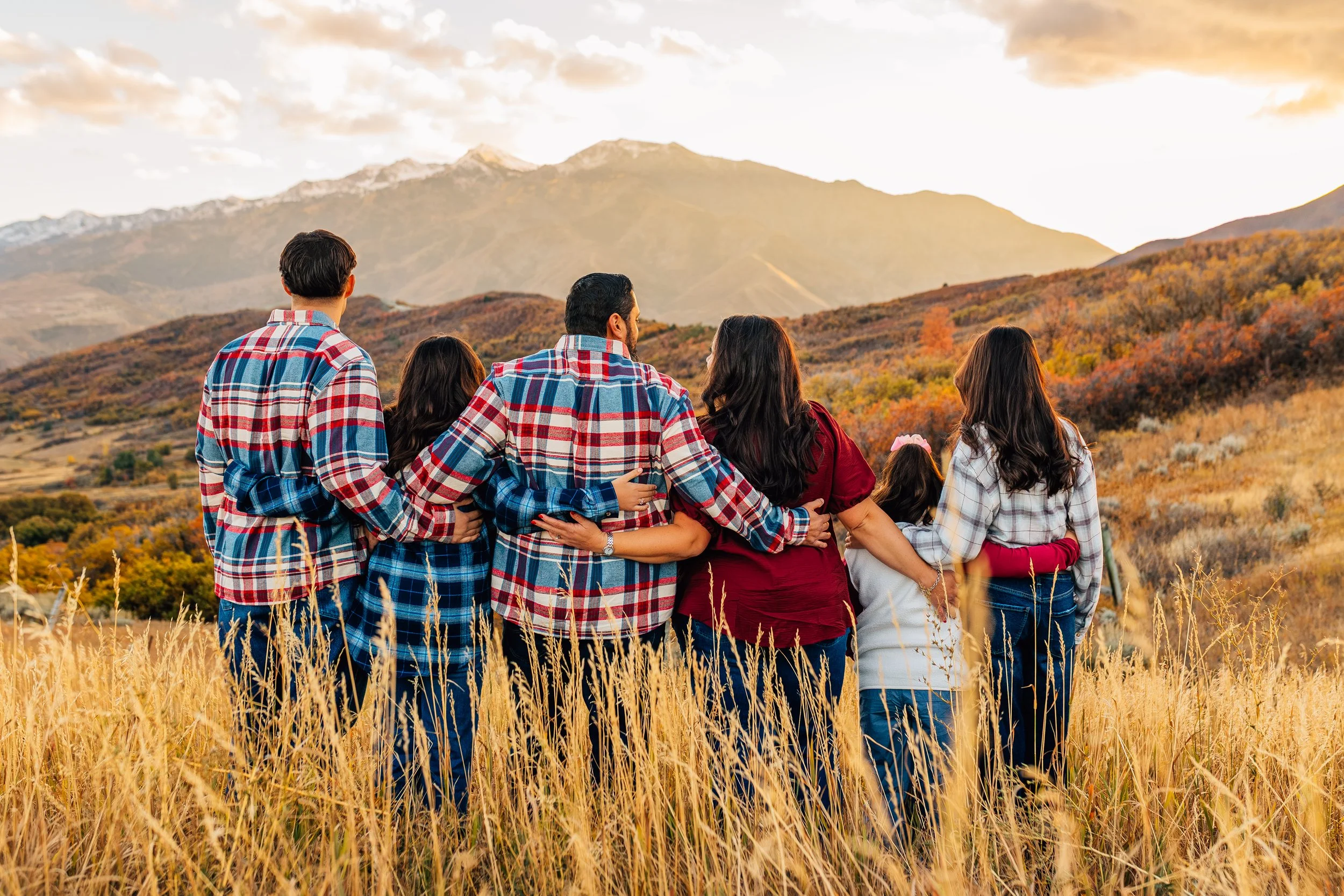
Connection over close-ups. Documentary-style family photography in Northern Utah that tells your story without needing to show every face.
Your family does not owe the internet anything.
You deserve beautiful family photography.
You deserve thoughtful boundaries.
You deserve a photographer who takes both seriously.
Whether you choose full sharing, limited sharing, or complete privacy, your decision is valid. My role as a documentary family photographer in Salt Lake County is not to decide for you. It is to support you.
In a world where images move fast and live forever online, trust matters. And when you hire a family photographer, that trust should be honored.
If you are looking for family photography in Salt Lake, Davis, or Weber County that prioritizes connection, authenticity, and client privacy, I would be honored to work with you.
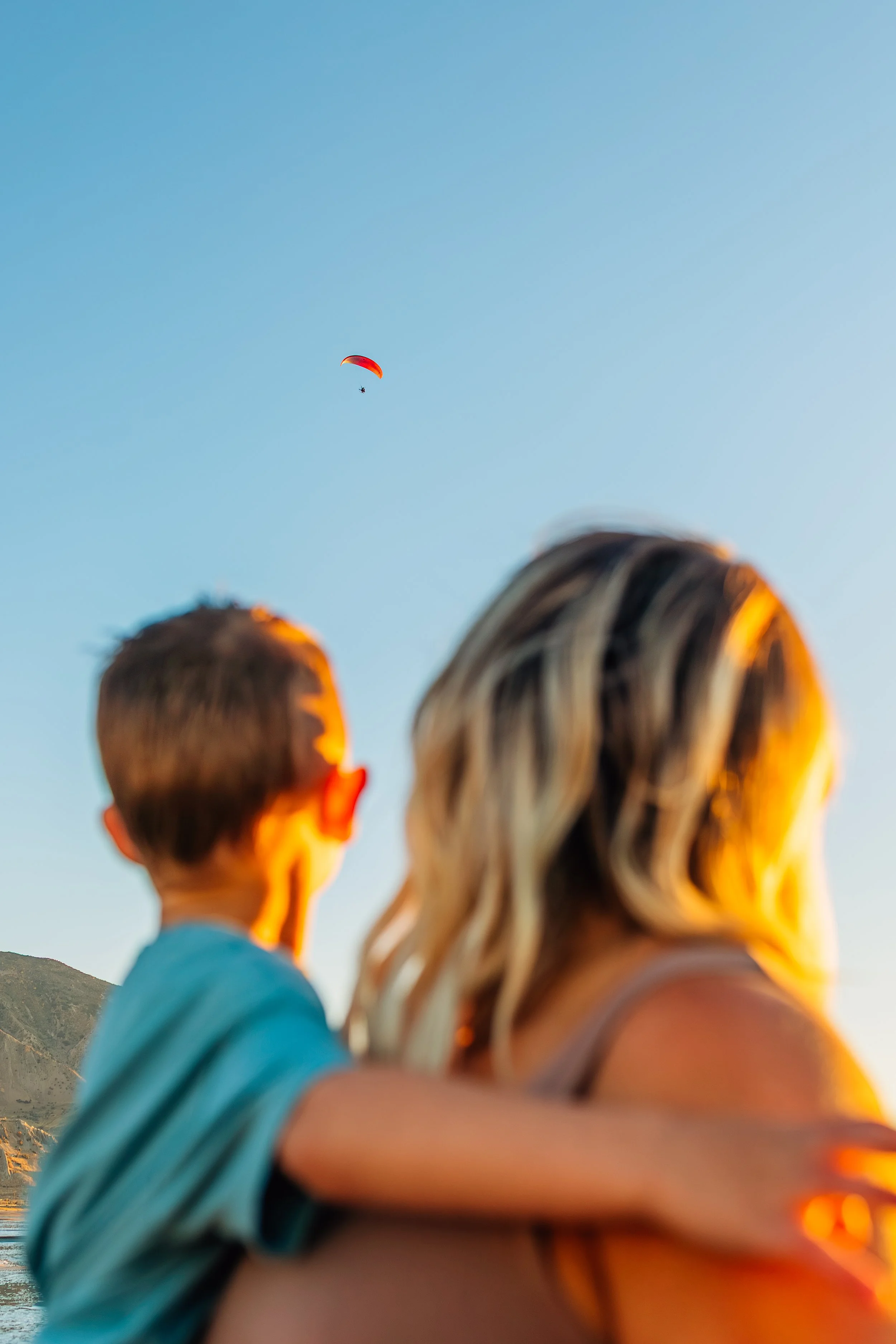
Not every story needs a close-up. Sometimes it’s about the way they look at the world together.
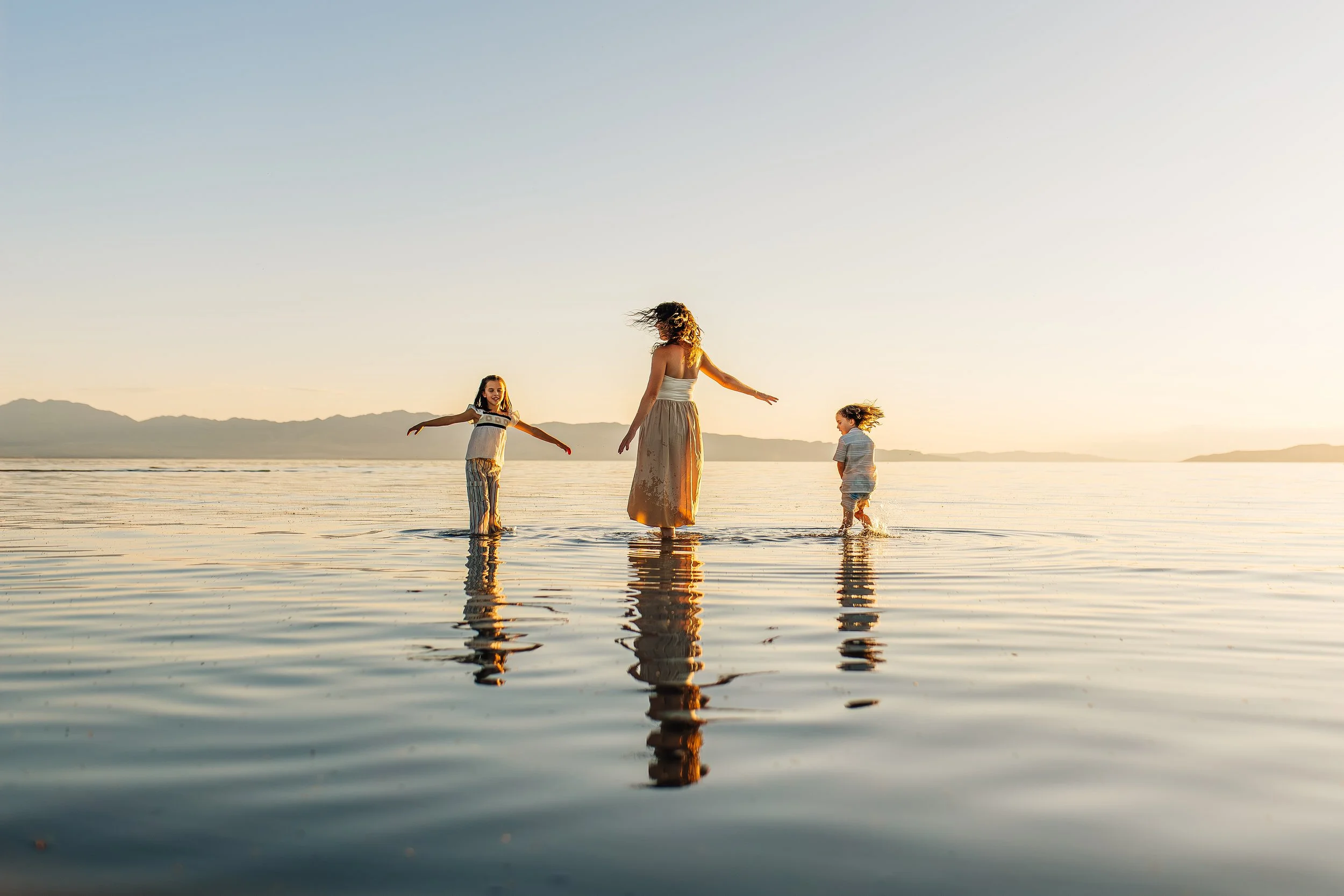
Why Choose a Documentary Photographer in Utah
Documentary family photography in Northern Utah is about more than how things look. It’s about how they felt. Instead of stiff poses and forced smiles, a documentary approach focuses on real moments as they naturally unfold, even in unpredictable light, busy environments, and full-on kid chaos. This post explains what documentary photography really is, why it works so well for real families, and how choosing a photographer who can adapt to real life can completely change how your photos feel years from now.
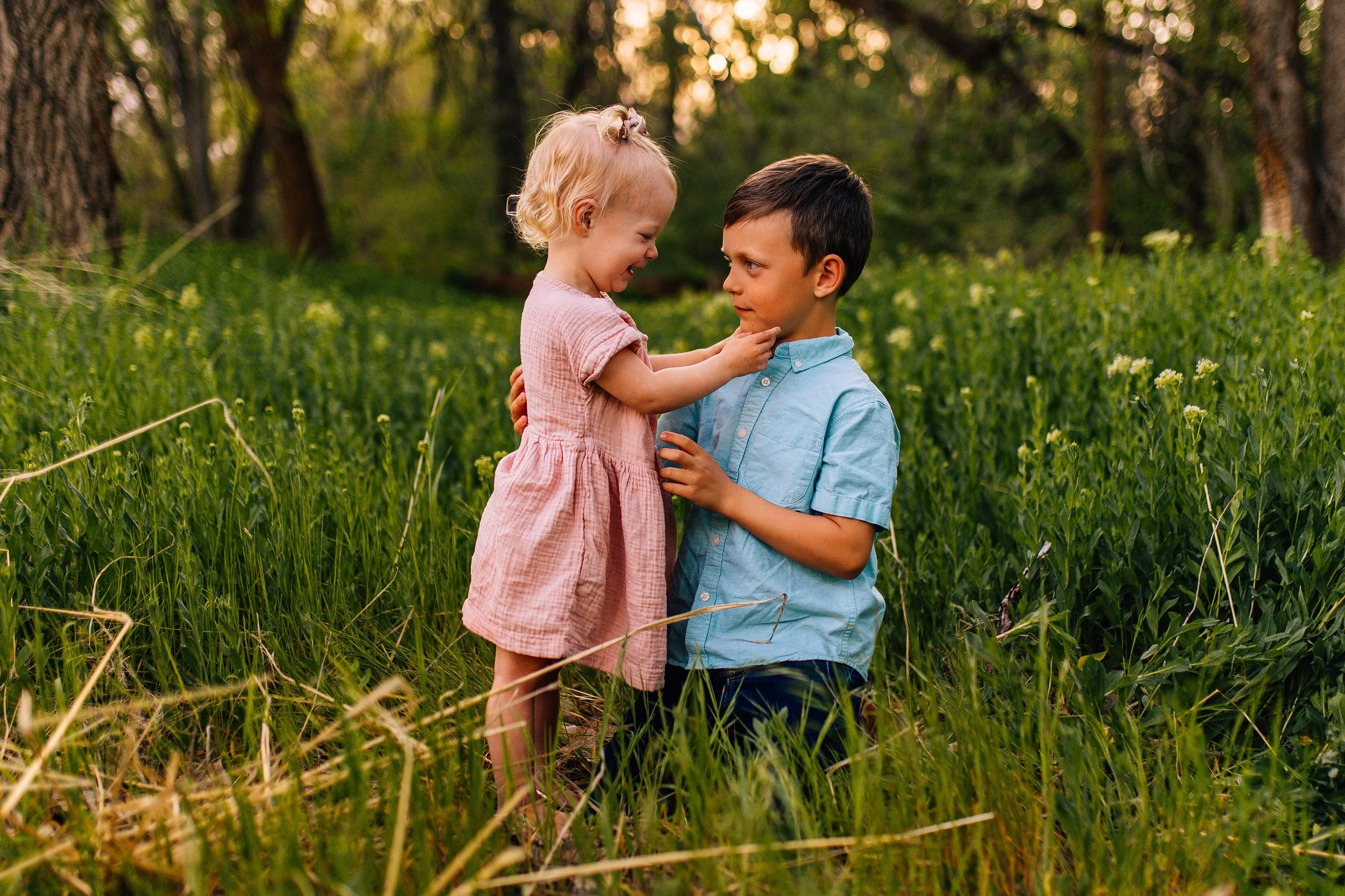
A quiet, unposed moment between siblings, photographed using a documentary family photography approach in Northern Utah. Moments like this don’t need direction. They just need space.
If you’ve ever looked at family photos and thought, “This doesn’t actually feel like us,” there’s a good chance you’re reacting to the difference between posed photography and documentary photography.
Documentary family photography isn’t about perfect smiles or stiff posing. It’s about paying attention. It’s about reading the room, anticipating moments, and knowing how to photograph what’s real as it unfolds. The laughter that happens in between directions. The quiet moments no one notices until they’re gone. The connections that can’t be recreated once they pass.
And that matters even more in Utah, where no two sessions ever look the same. Light changes fast. Weather shifts without warning. Kids run, climb, splash, melt down, and reset. A documentary photographer has to be able to lean into whatever the environment gives them, whether that’s harsh sun, overcast skies, wind, or movement, and still tell the story honestly. That ability to adapt is what separates posed images from photographs that actually feel like your life.
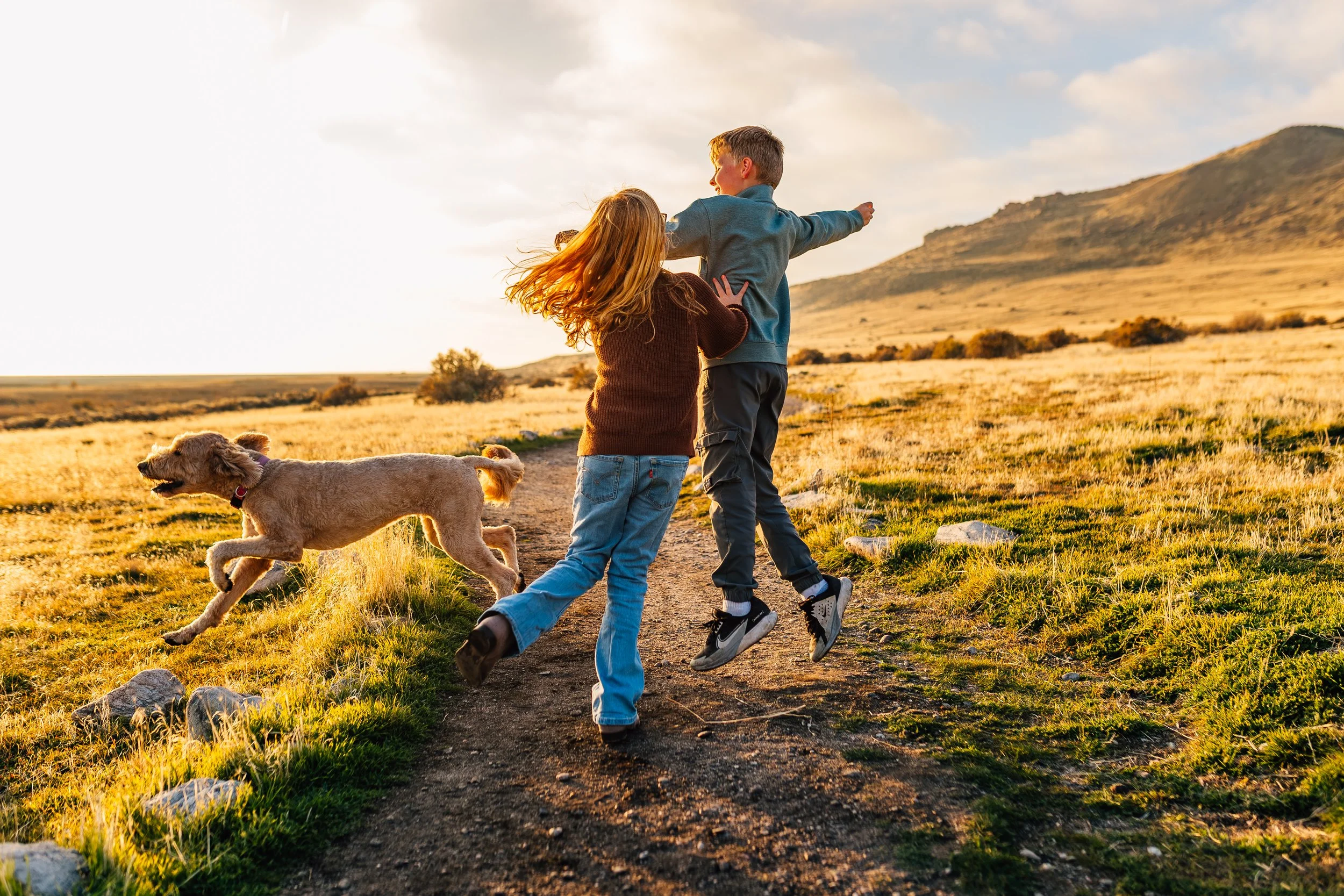
Documentary family photography captures real movement and emotion, like this candid moment during an outdoor session in Northern Utah.
What Documentary Photography Really Means
Documentary photography focuses on real moments instead of manufactured ones. There’s no heavy posing, no constant direction, and no pressure to perform for the camera.
Instead, a documentary photographer observes, anticipates, and responds. The goal isn’t to make things look perfect. The goal is to make them feel true. That means working with whatever unfolds in front of the lens, not trying to control it.
And if your kids feel like walking chaos, that’s not a reason to avoid family photos. It’s actually one of the best reasons to choose a documentary family photographer. Movement, noise, emotion, and unpredictability aren’t obstacles here. They’re the raw material. Documentary photography thrives in the in-between moments. Kids moving instead of standing still. Laughter that wasn’t planned. Meltdowns that turn into hugs. The quiet moments that happen when no one is being told what to do.
Those are often the images that end up meaning the most later, especially in real life, where things are rarely calm or perfectly timed. For families in Utah, where sessions often involve changing light, wide open spaces, and kids who want to explore instead of pose, documentary photography allows your family to show up exactly as they are and still walk away with photographs that feel honest and lasting.
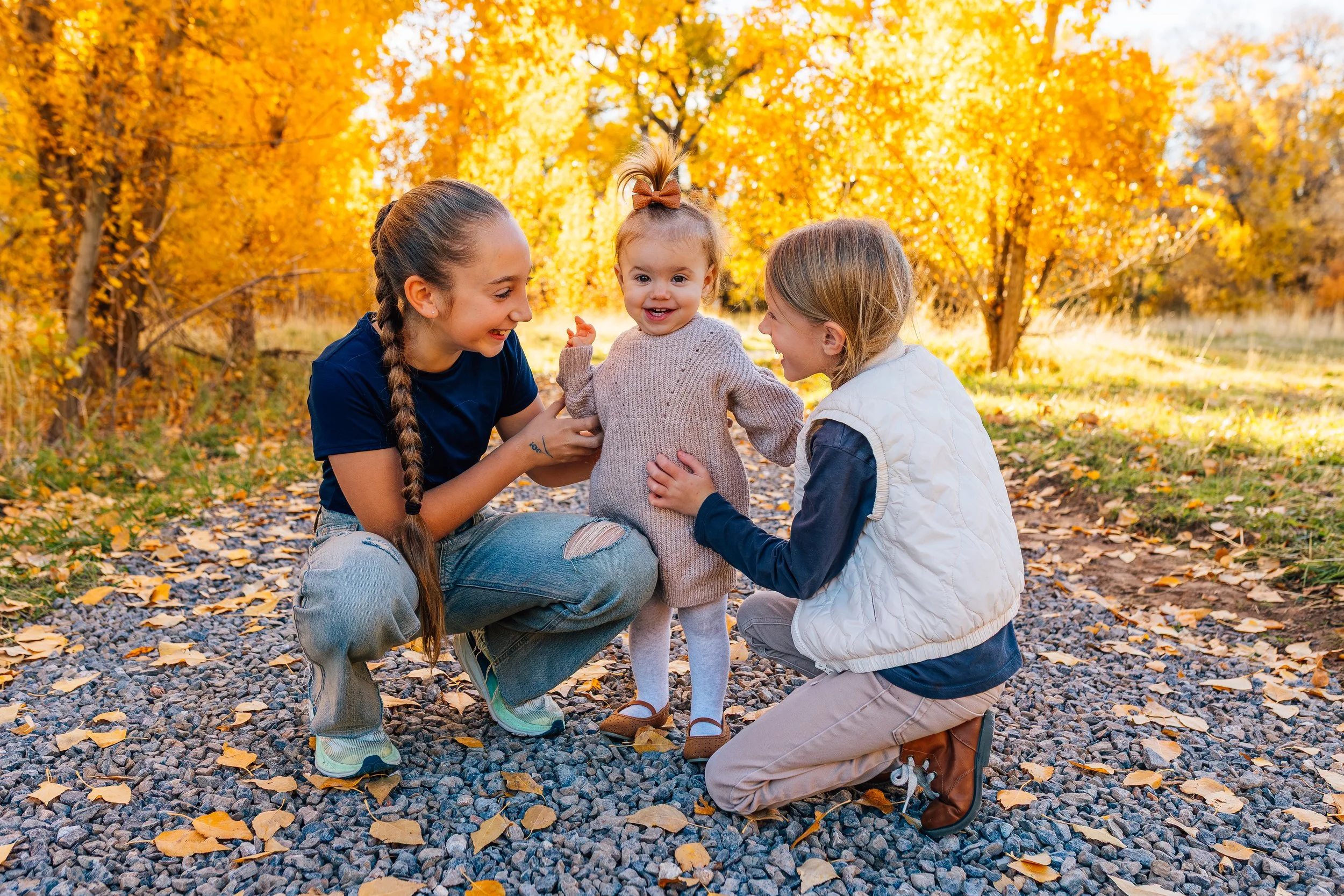
Documentary family photography focuses on connection over posing, capturing real interactions like this candid fall moment during a Northern Utah session.
Utah Isn’t a Studio, and That’s the Point
One of the biggest differences between documentary photography and traditional portrait photography is how lighting is handled.
In a studio, lighting is controlled. Outdoors in Utah, it rarely is. And that’s exactly the point.
Utah throws everything at you. Harsh midday sun. Fast-moving clouds. Wind that changes direction mid-moment. Reflective surfaces. Dark interiors. Golden light that either lingers longer than expected or disappears entirely. Documentary photography doesn’t wait for ideal conditions. It adapts to whatever is happening in real time.
A documentary photographer has to be comfortable working in all of it. That means knowing how to capture meaningful moments in low light or mixed lighting, adjusting quickly when weather, timing, or locations shift, and using available light instead of fighting against it. There’s no stopping a moment to “fix the light” when something real is happening.
That ability comes from experience. From photographing families in unpredictable environments and learning how to read light as it changes. Documentary photographers don’t rely on perfect conditions. They rely on awareness, adaptability, and the ability to tell a story no matter what Utah decides to do that day.
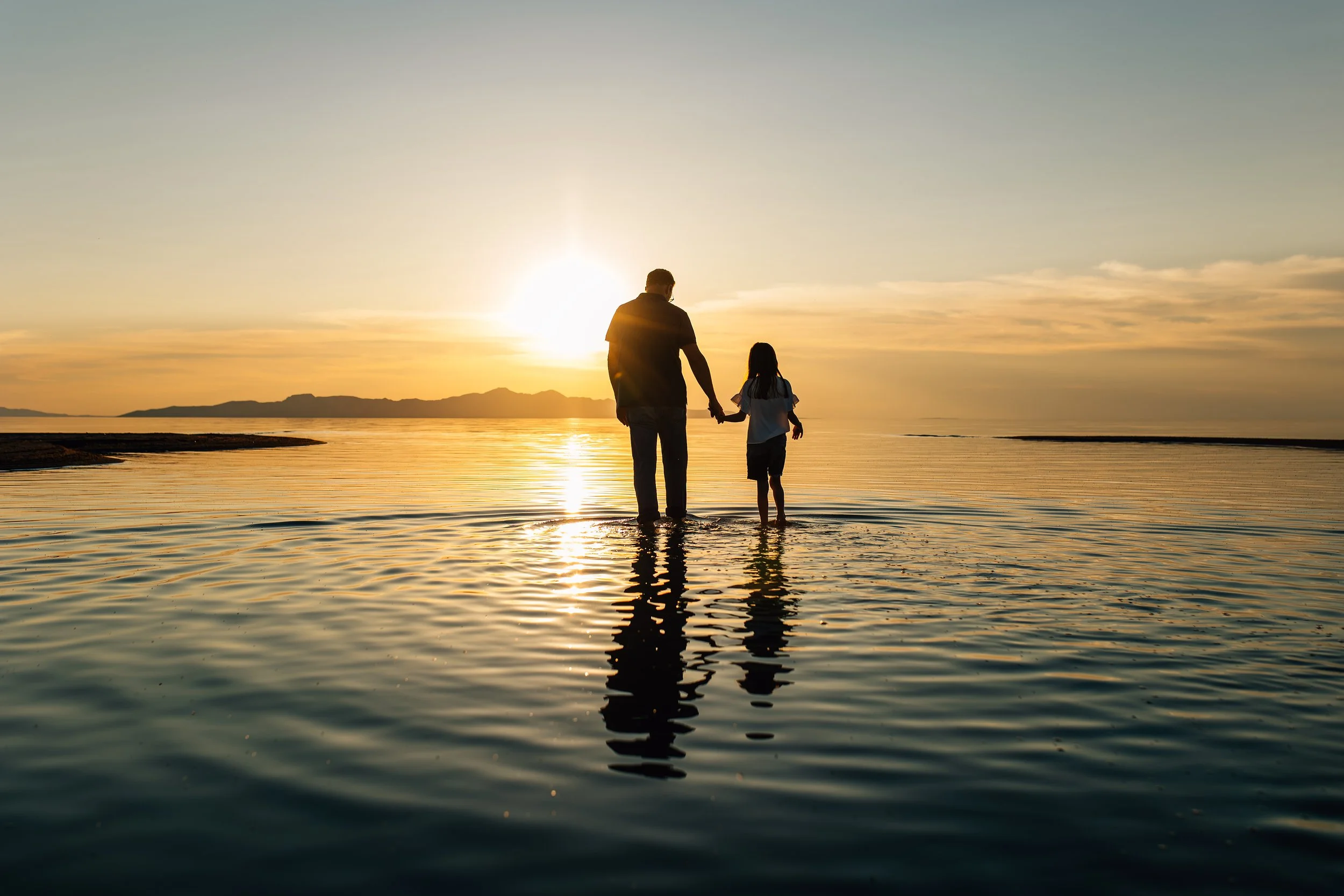
Documentary family photography in Utah focuses on real connection, capturing quiet moments like this sunset walk at the Great Salt Lake.
Real Life Doesn’t Pause for Photos
Another reason families in Northern Utah choose documentary photography is simple: real life doesn’t pause just because photos are happening.
Kids don’t stay still, and they’re not supposed to. They run, climb, wander off, change their minds, fall apart, recover, and keep going. Events don’t run on schedule. Emotions don’t wait for instructions. Trying to force any of that into a neat, posed box usually creates more stress than memories.
Documentary family photography allows space for all of it. Instead of asking kids to perform, it lets them exist as they are. Curiosity, chaos, energy, and emotion aren’t treated as problems to solve. They’re part of the story. And when kids are allowed to be themselves, families relax. That’s when real connection shows up.
This approach works across all kinds of sessions in Utah, from outdoor family photography to in-home newborn sessions, extended family gatherings, branding sessions, and real-life events where moments matter more than appearances. There’s no stopping a moment to fix a pose or reset a mood. Documentary photographers work within what’s happening, not against it.
Because the most meaningful images don’t come from controlling the moment. They come from paying attention while it unfolds.
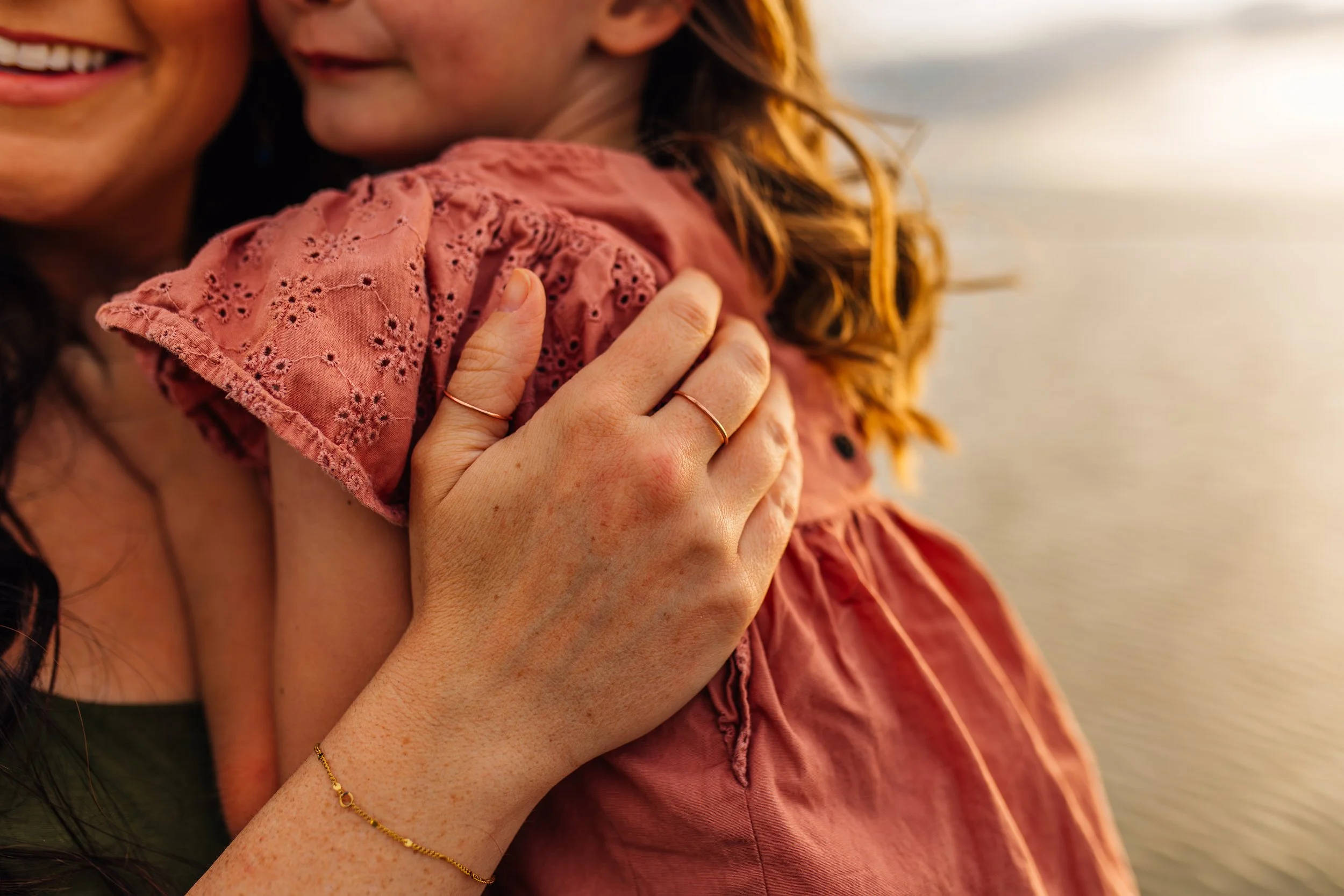
Documentary family photography captures the quiet moments too, like the way a parent holds their child when no one is posing.
The Difference You Feel Later
The biggest difference between posed photography and documentary photography usually isn’t obvious right away. It shows up years later.
It’s in the images that bring you back to how something felt instead of how it looked. The ones that remind you of personalities, relationships, and fleeting stages of life.
Those aren’t moments you can recreate on command.
They have to be noticed.
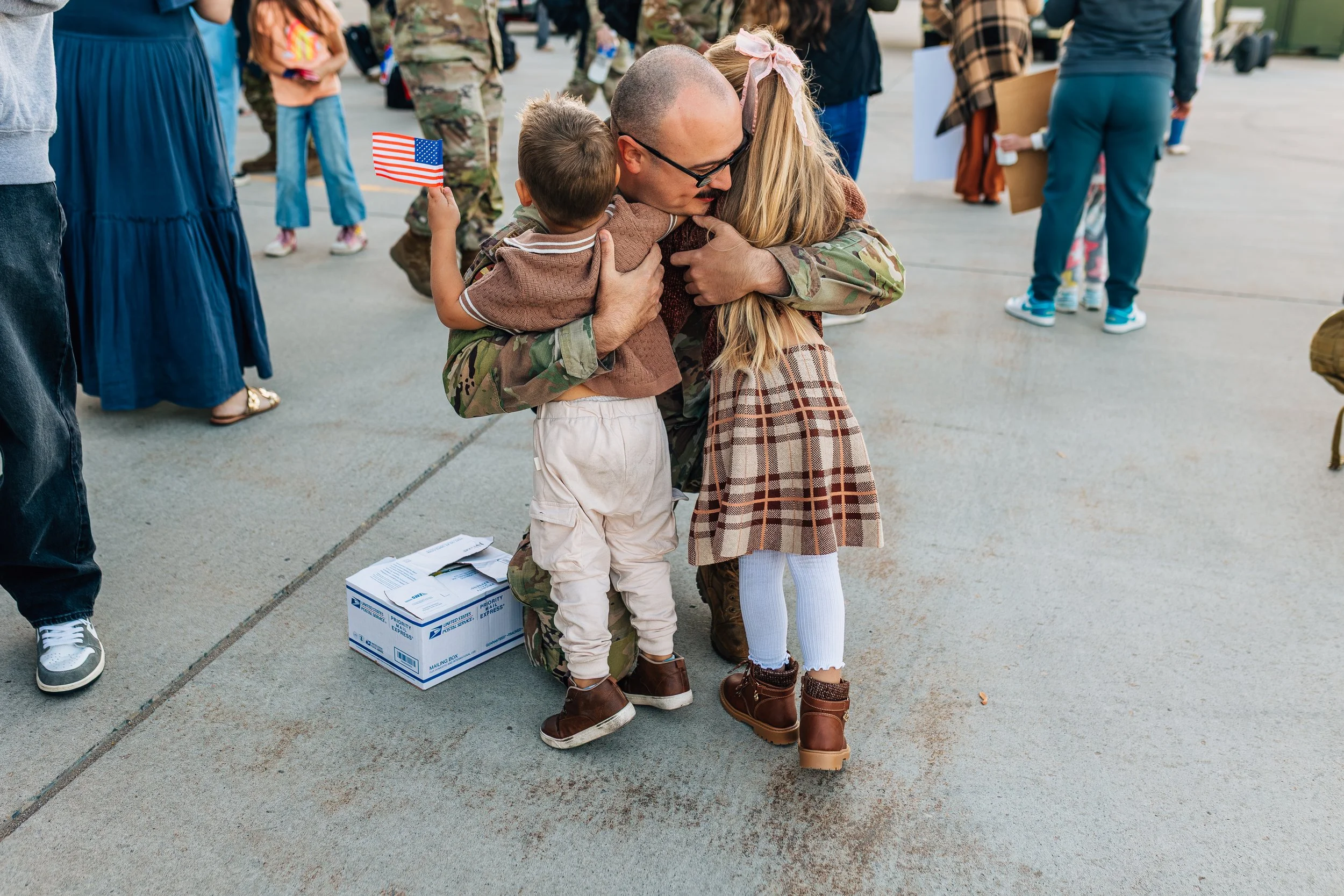
Documentary photography matters most in moments you can’t plan, like a military homecoming, where real emotion unfolds without direction.
Is Documentary Photography Right for You?
Documentary photography might be a good fit if:
You value connection over perfection
You want images that feel natural and unforced
You care more about storytelling than rigid posing
You want photos that reflect real life, not a performance
It’s not about rejecting beauty. It’s about finding it in places that aren’t staged.
And to be clear, choosing a documentary photographer doesn’t mean you won’t have any posed images. I always make sure we capture a handful of relaxed, intentional portraits as well. The difference is that they don’t dominate the session or interrupt the flow of what’s happening. They’re woven in naturally, without turning your time together into a checklist.
If you want a mix of authentic moments and a few classic portraits, documentary family photography in Utah allows room for both. You don’t have to choose between images that feel real and images that look good. When the approach is flexible, you get both.
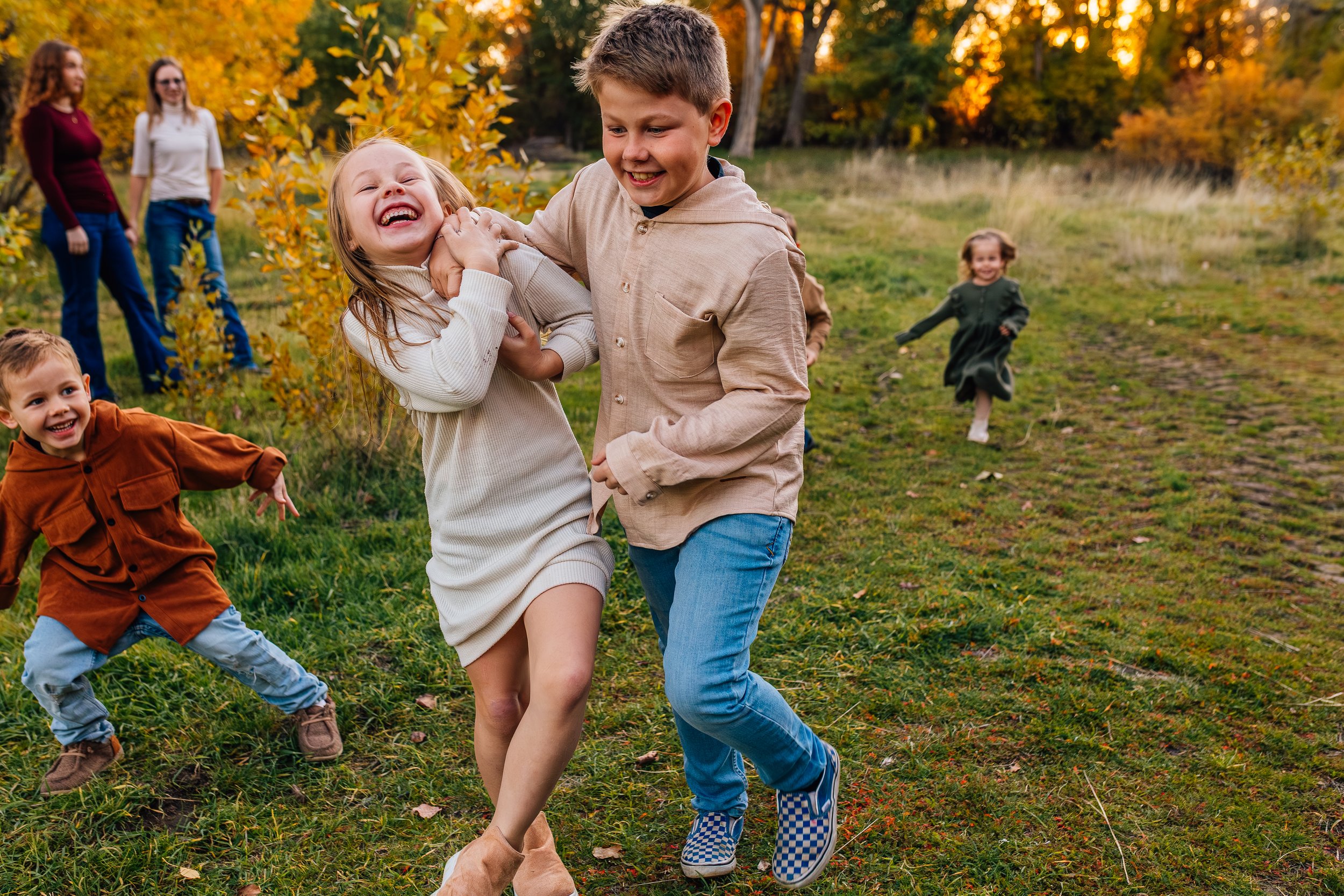
Real moments happen fast. Documentary family photography in Utah is about letting kids be kids and capturing the chaos, laughter, and connection exactly as it unfolds.
A Documentary Approach in Northern Utah
As a Northern Utah documentary photographer, I approach every session knowing that no two families, locations, or lighting situations are ever the same.
That’s not a challenge to overcome. That’s the entire point.
Family photography in Northern Utah means working with a wide range of environments and experiences. One session might be outdoors with changing light and weather. Another might be inside your home, navigating tight spaces, window light, and real life unfolding in the background. Others happen during meaningful events where moments move quickly and emotions run high.
No matter the setting, the focus stays the same: paying attention, adapting as things shift, and capturing moments as they actually happen. There’s no forcing a narrative or trying to recreate something that doesn’t fit. The goal is to document what’s real with intention and care.
Because the most meaningful images are usually the ones you couldn’t plan for, even if you tried.
Want to book a session today? Follow this link to see what specific sessions I currently have available, and even book your date!
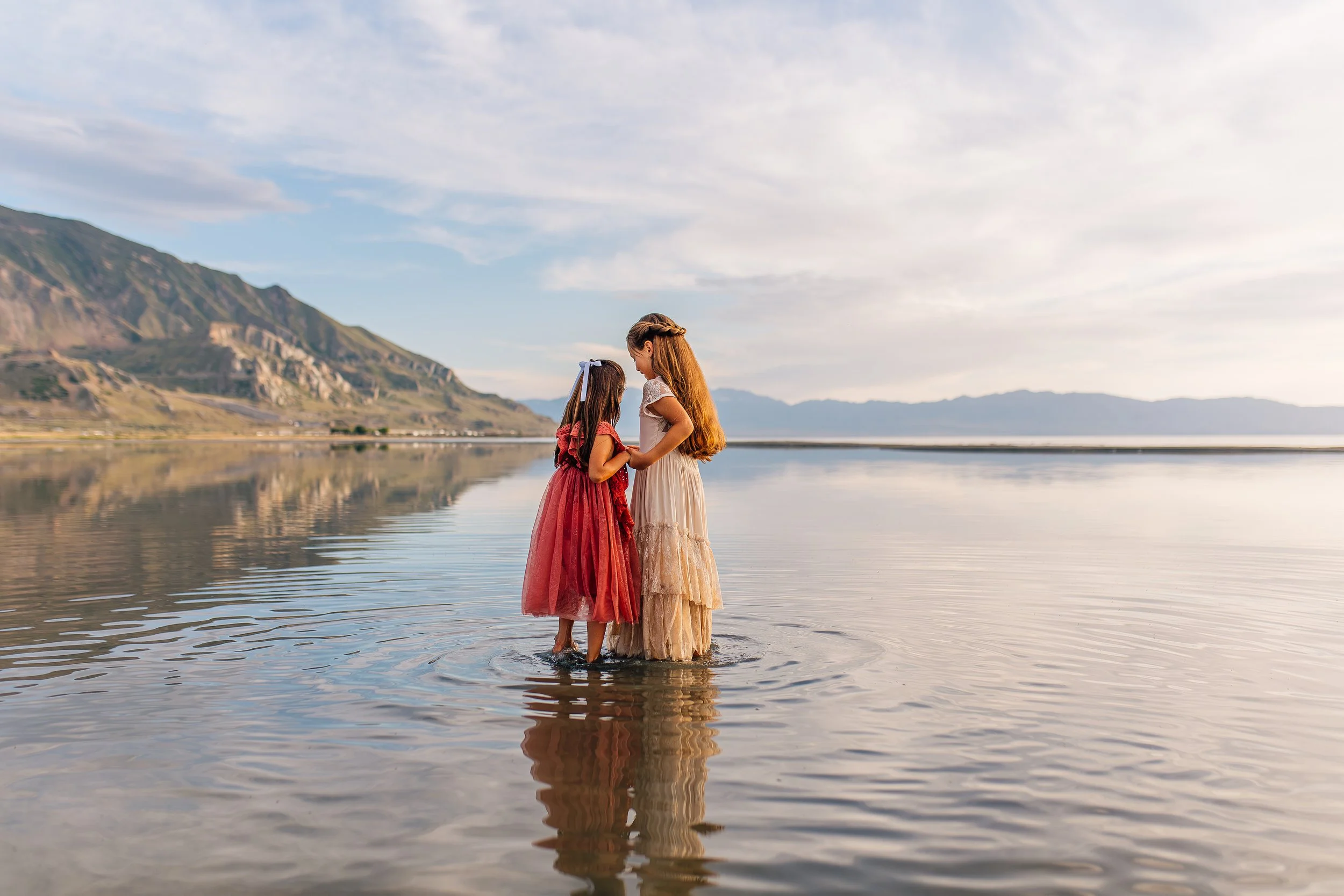
Some moments don’t need direction. Documentary family photography is about noticing the quiet connections and letting them unfold naturally.
Photographing Families Near Saltair and the Great Salt Lake
Photographing families near the Great Salt Lake offers a rare opportunity to document both connection and place. Locations like Saltair and the Great Salt Lake shoreline are some of the most visually striking and emotionally layered places for family photography in Northern Utah. In this blog, I share what it’s like to photograph families at the Great Salt Lake, the history and current state of the lake, and why documentary photography is uniquely suited for this environment. From changing water levels and exposed shoreline to brine flies, long walks, and unpredictable conditions, photographing here reflects the reality of a lake that is actively disappearing. These Great Salt Lake photography sessions are about preserving memories, honoring real moments, and bringing awareness to a landscape that plays a critical role in Utah’s ecosystem.
Documenting a Changing Lake and Why It’s Worth Protecting
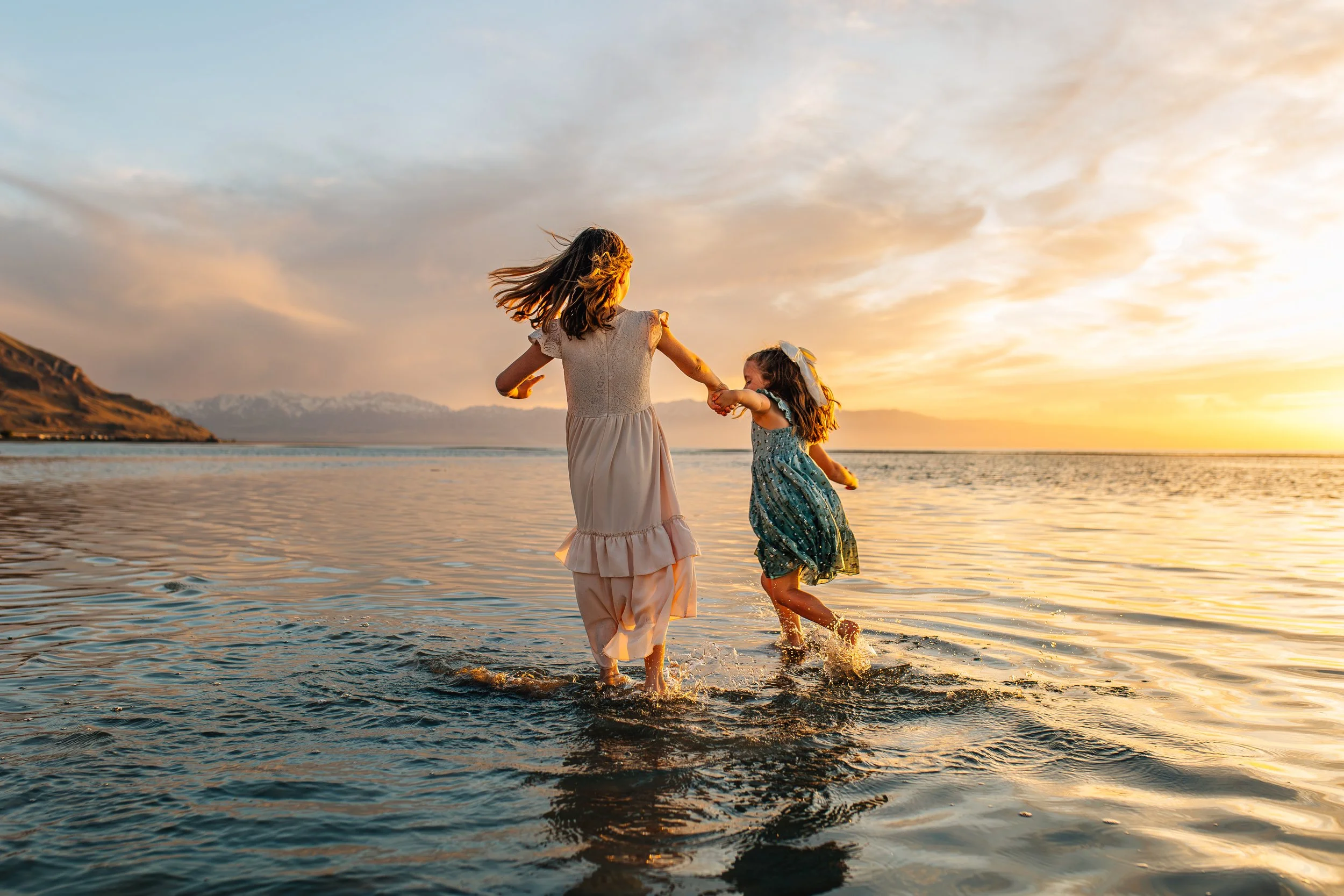
The Great Salt Lake shoreline as it exists now.
There’s a stretch of shoreline near Saltair that feels different from most places people choose for family photos. It’s open and quiet, a little stark, and deeply beautiful in a way that isn’t trying to impress anyone.
I photograph families here because it tells the truth. About the landscape. About time. About how small we are inside something much bigger.
And also because this place is changing.
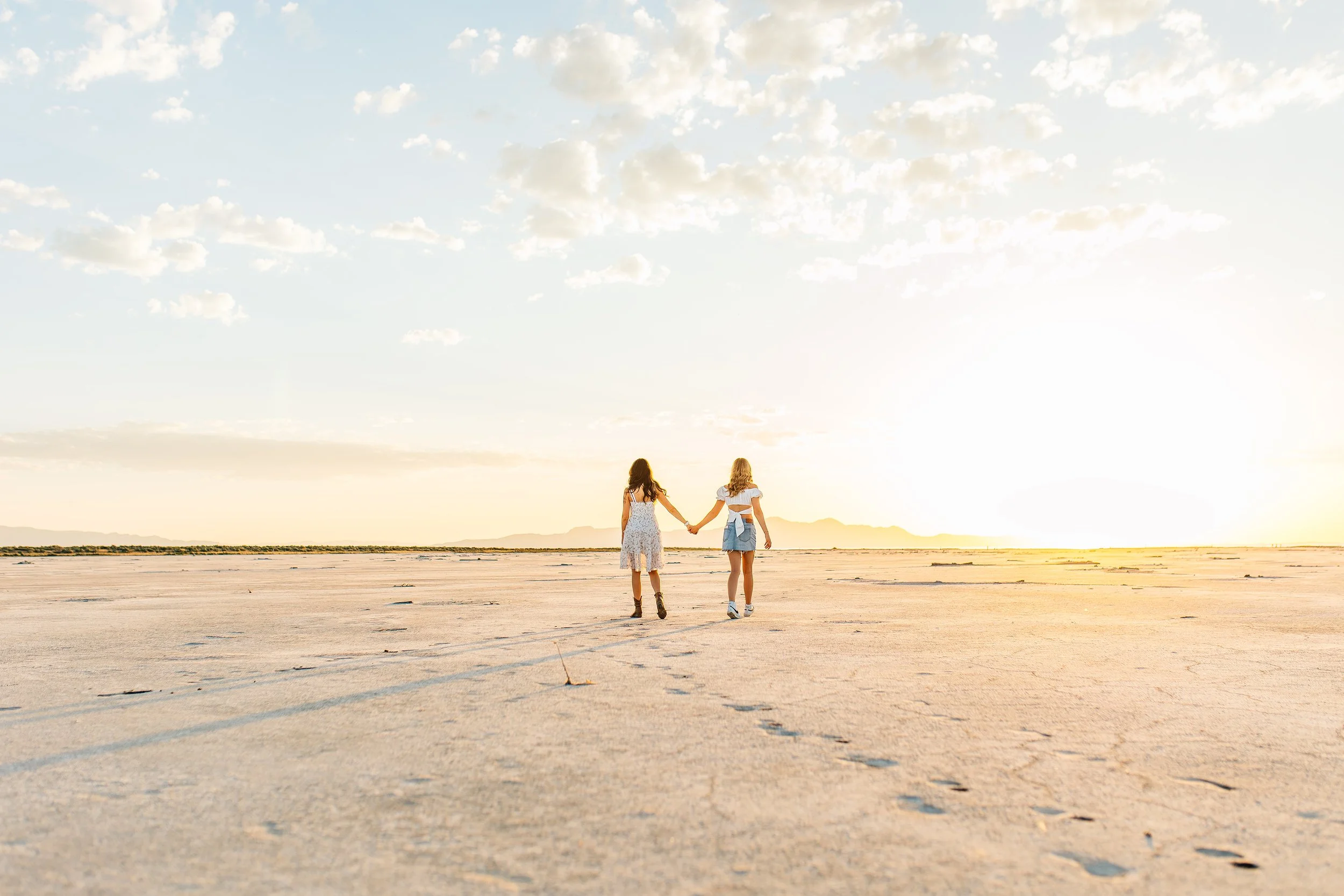
A moment held in a landscape that is slowly disappearing.
Saltair isn’t just a backdrop
Saltair used to be loud. It was a destination, a gathering place, a place people came to escape the heat and be entertained. Over time, the lake shifted, the crowds disappeared, and what remains is something weathered and stripped back.
That history matters, even if you don’t know the dates or the details.
You can feel it in the building. In the emptiness around it. In the way the shoreline stretches out farther than you expect. Photographing near Saltair isn’t about recreating what it once was. It’s about acknowledging what it is now.
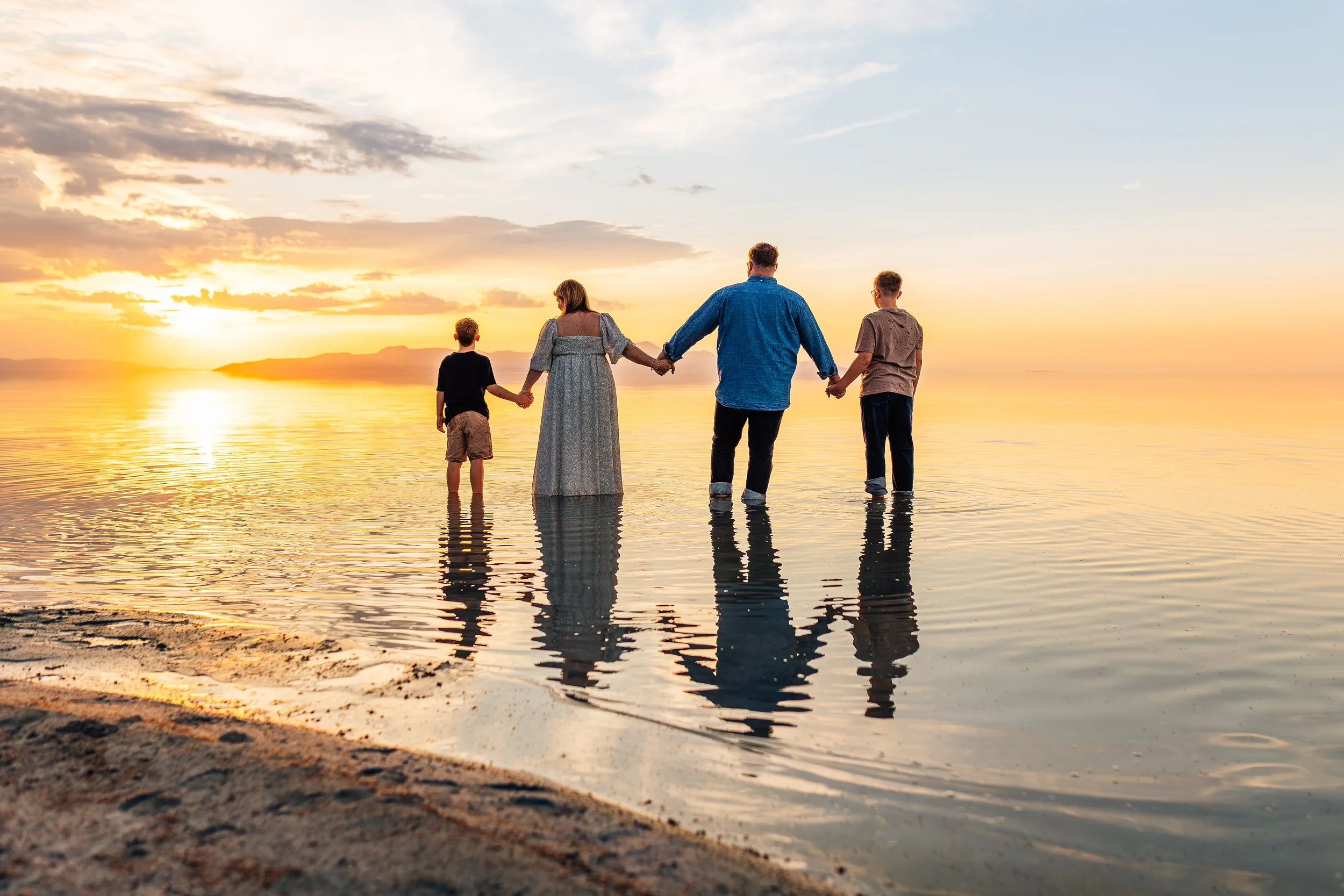
Together at the edge of the Great Salt Lake.
The Great Salt Lake is drying up, and you can see it
This isn’t abstract when you’re standing there.
The waterline sits farther away than it used to. The ground cracks in places where water once was. You walk longer distances just to reach the edge of the lake. Sometimes you’ll notice dead birds scattered in the sand, casualties of an ecosystem under stress.
It’s sobering. And it’s real.
Photographing here feels less like creating something staged and more like documenting a moment in time. The lake won’t always look like this. And pretending otherwise doesn’t serve anyone.
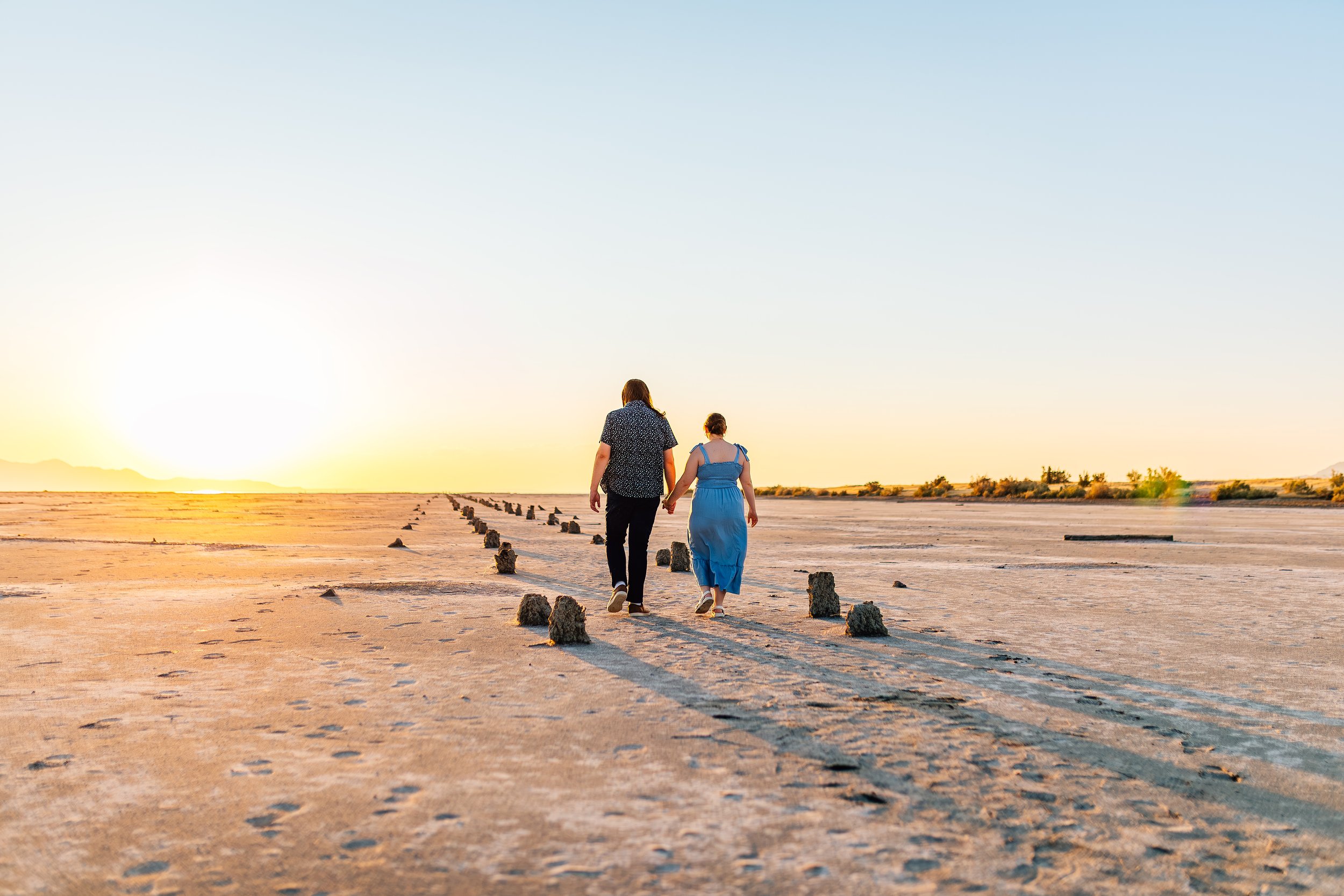
Evidence of how much the Great Salt Lake has receded.
Beauty and discomfort exist together here
This location isn’t polished. And that’s the point.
There are brine flies when conditions are right. They don’t bite, but they show up in numbers, clinging to shoes and skin and reminding you that this place is alive and struggling at the same time.
There’s wind that lifts hair and clothing. There’s distance to walk from parking areas to where sessions actually take place. There’s uneven ground and silence and space.
All of these things are connected to the lake itself. To its changing levels. To its fragile balance.
And yet, somehow, it’s still beautiful.
The light is incredible. The sky feels endless. The scale of the landscape makes even quiet moments feel important. Kids wander. Families slow down. The environment asks less of you and gives more in return.
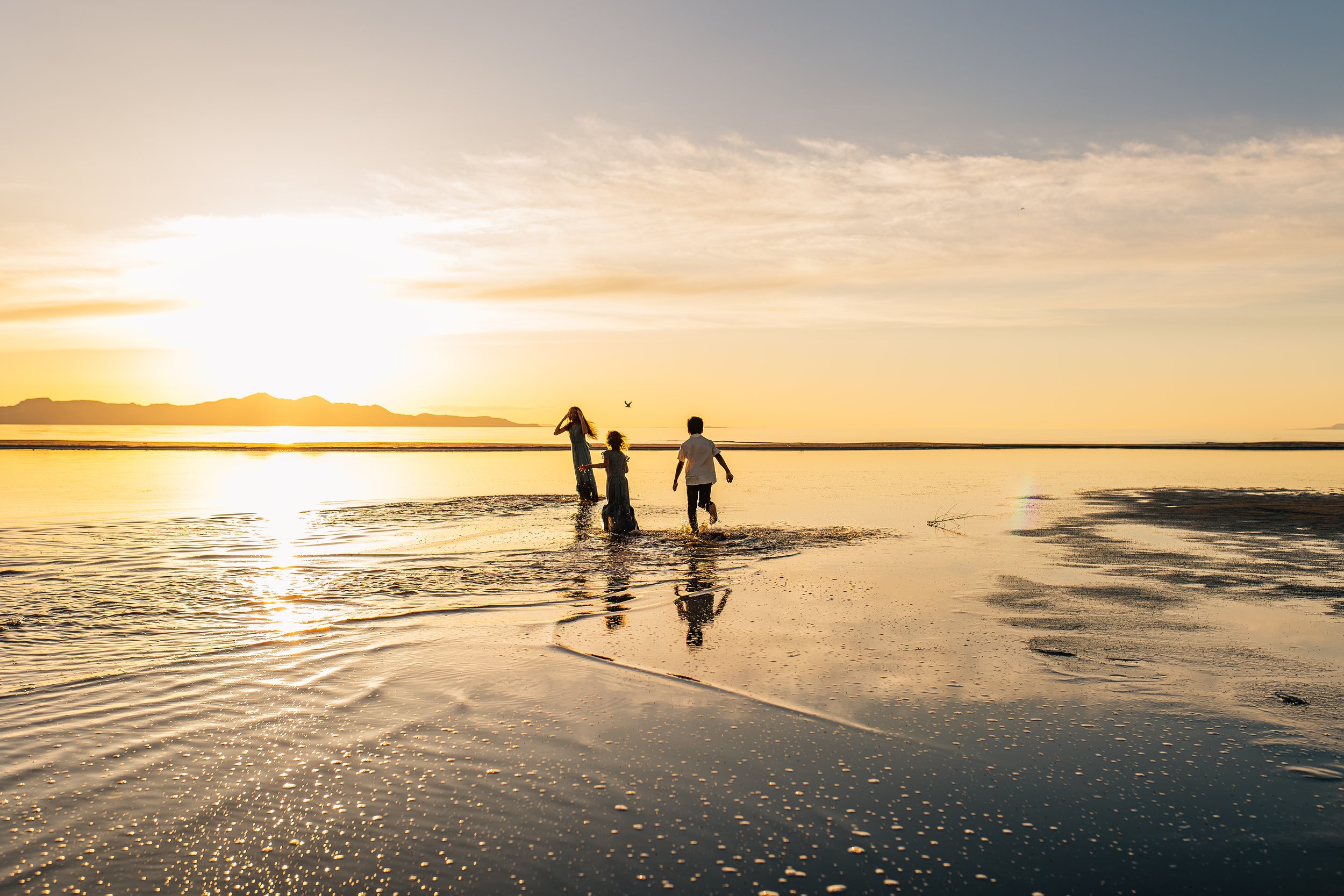
Moments of play exist alongside a changing lake.
Why I still photograph families here
I don’t bring families here to ignore what’s happening to the lake. I bring them here because of it.
There’s value in remembering what a place looks like now. In letting kids explore a shoreline that may not exist in the same way years from now. In standing inside something imperfect and real instead of chasing a version of beauty that feels disconnected from reality.
Enjoying this place and caring about its future are not opposites. They belong together.
If anything, photographing here has made me more aware of how much the Great Salt Lake matters. Not just visually, but ecologically. It supports wildlife, air quality, and the balance of this entire region. Saving the lake isn’t an abstract idea. It’s about preserving something that still has so much to give.
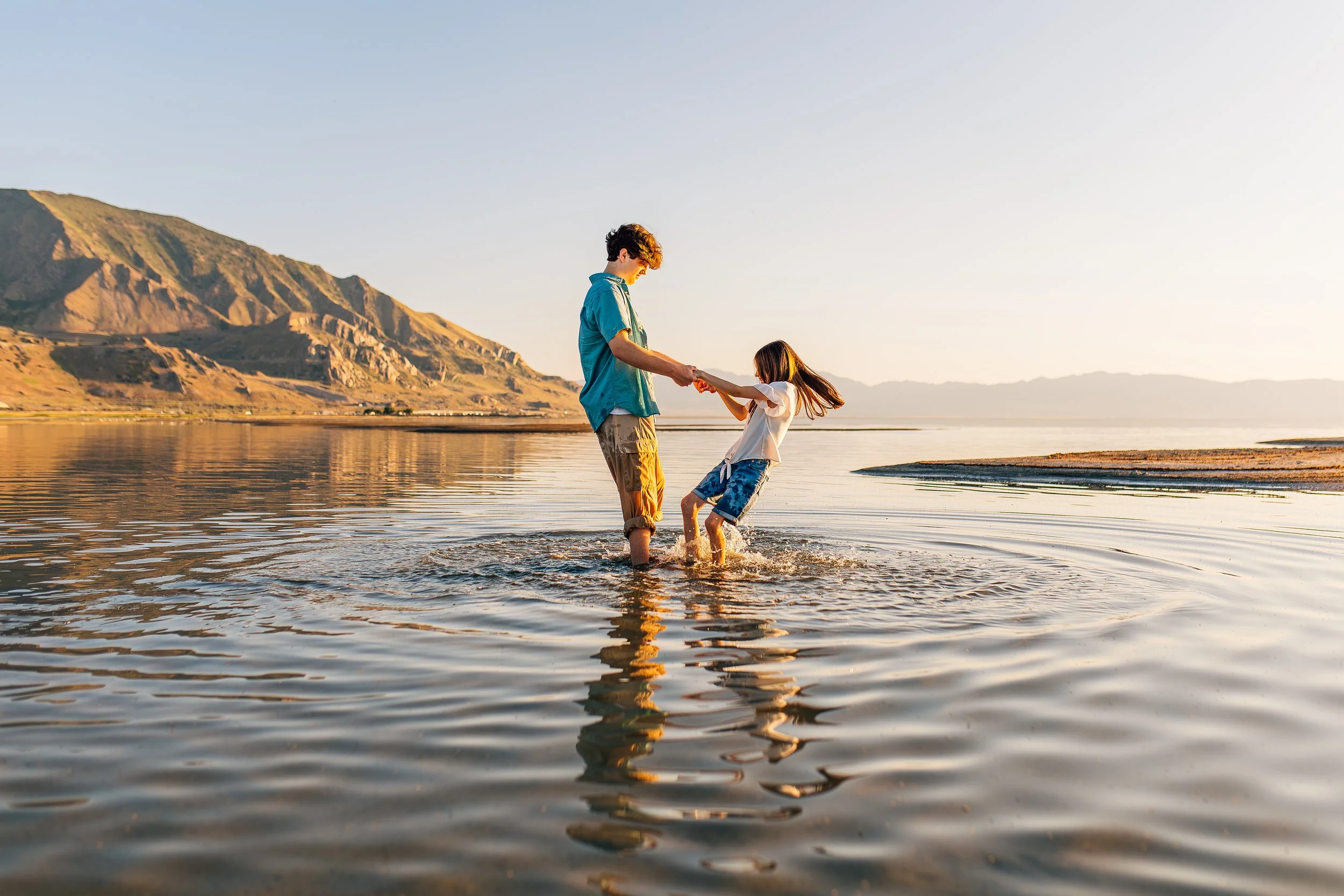
Moments of wonder still exist here.
What to know before choosing this location
This isn’t the easiest location, and I think that honesty matters.
There may be flies depending on the season and conditions. There may be a longer walk to reach the shoreline. You may see evidence of a changing ecosystem. This place asks for awareness and respect.
But for families who are open to that, who want photos that feel grounded and honest, this shoreline offers something rare.
It’s not about perfection. It’s about presence.
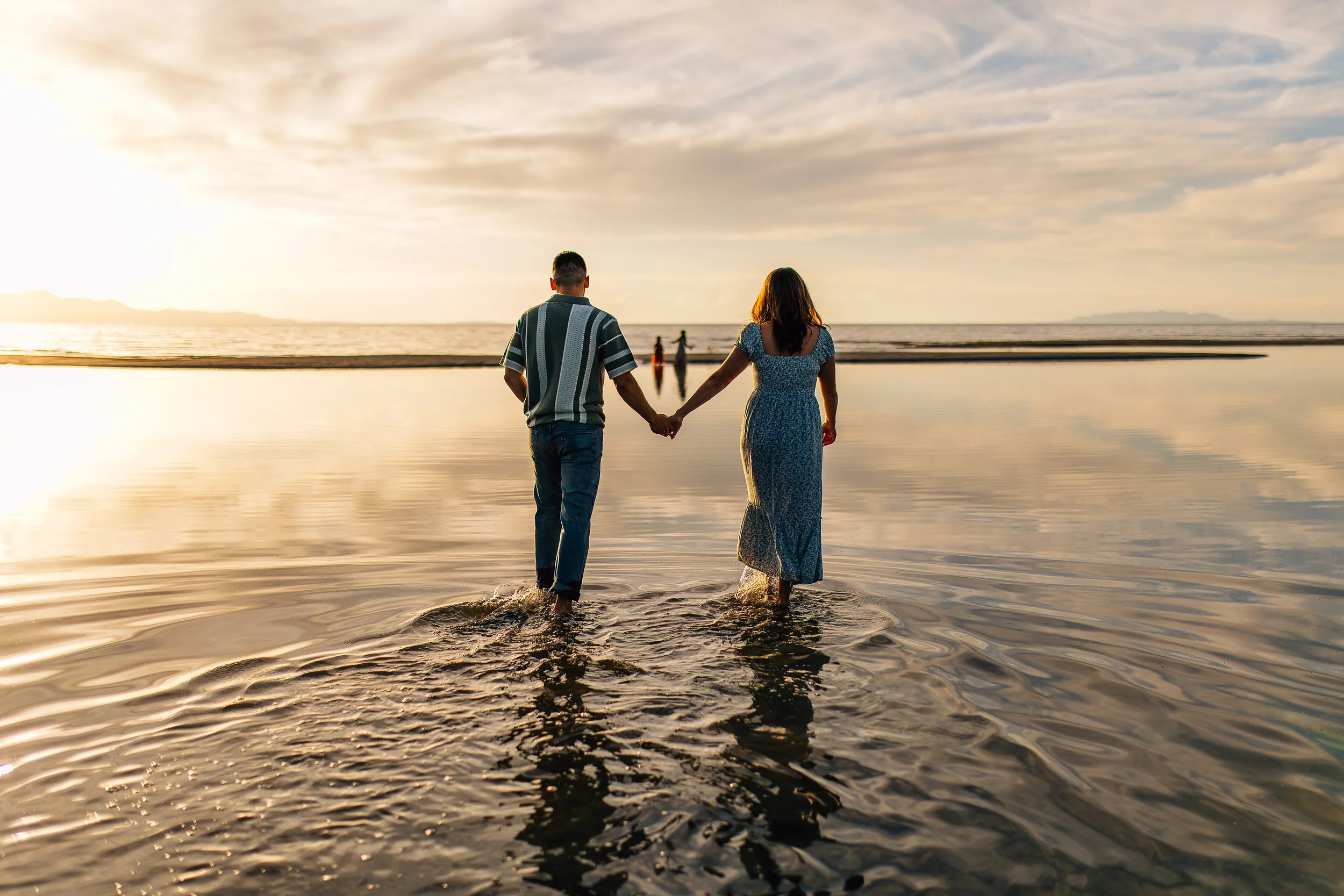
Family photos on the Salt Lake.
Holding space for what still exists
Photographing families near Saltair and the Great Salt Lake feels like holding space for contradiction. For beauty and loss. For joy and awareness. For the act of documenting something while also hoping it survives.
We can love this place and still acknowledge its fragility. We can create meaningful images here while also caring deeply about what happens next.
And maybe that’s the point.
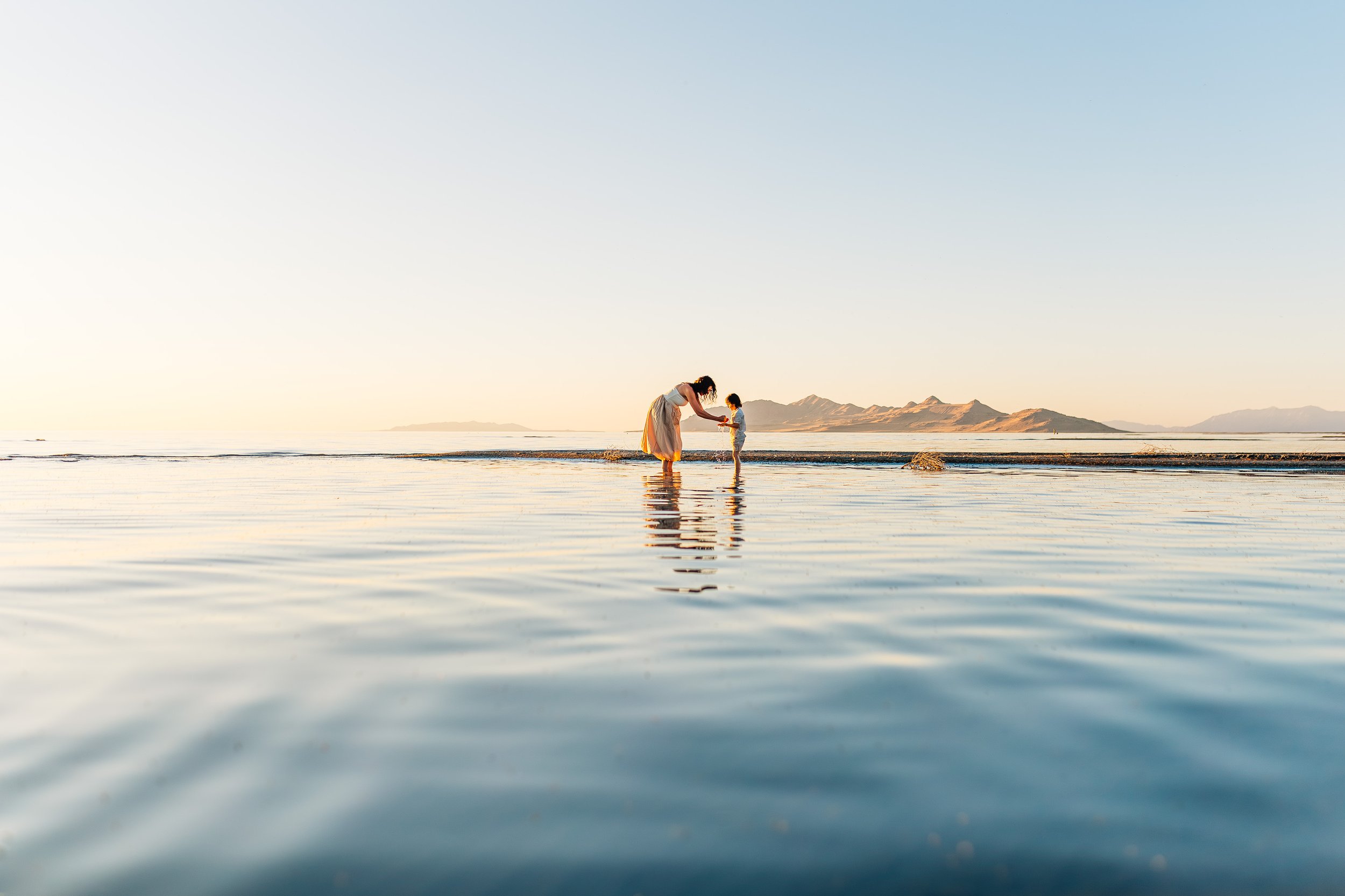
Moments of connection at the Great Salt Lake.
A Closing Note
This place is beautiful.
And it’s also changing.
Photographing the Great Salt Lake isn’t just about light, reflections, or wide open space. It’s about paying attention. About noticing what’s still here, and what we’re at risk of losing.
If we want future generations to experience this lake the way we have, it can’t stop at documenting it. It has to turn into action.
That means asking more of our government leaders. It means supporting organizations doing the work to protect the lake. And it means staying informed, even when the reality feels uncomfortable.
The Great Salt Lake matters. To our environment, our health, our wildlife, and our communities. It’s worth showing up for.
Learn More & Take Action
If you’re feeling called to do more, Save Our Great Salt Lake is a great place to start. They focus on advocacy, education, and real solutions aimed at protecting the future of the lake.
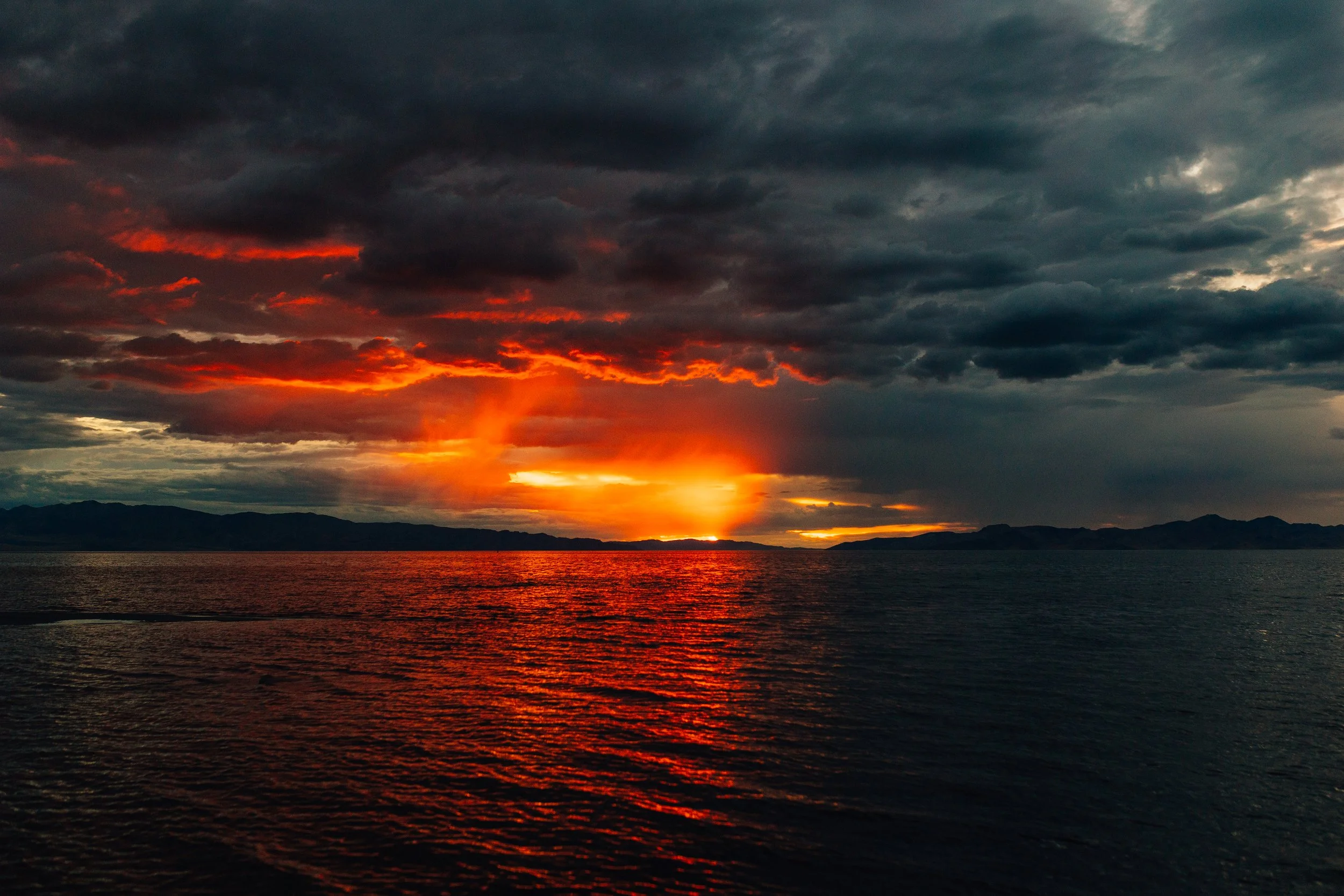
A changing sky over a changing lake.
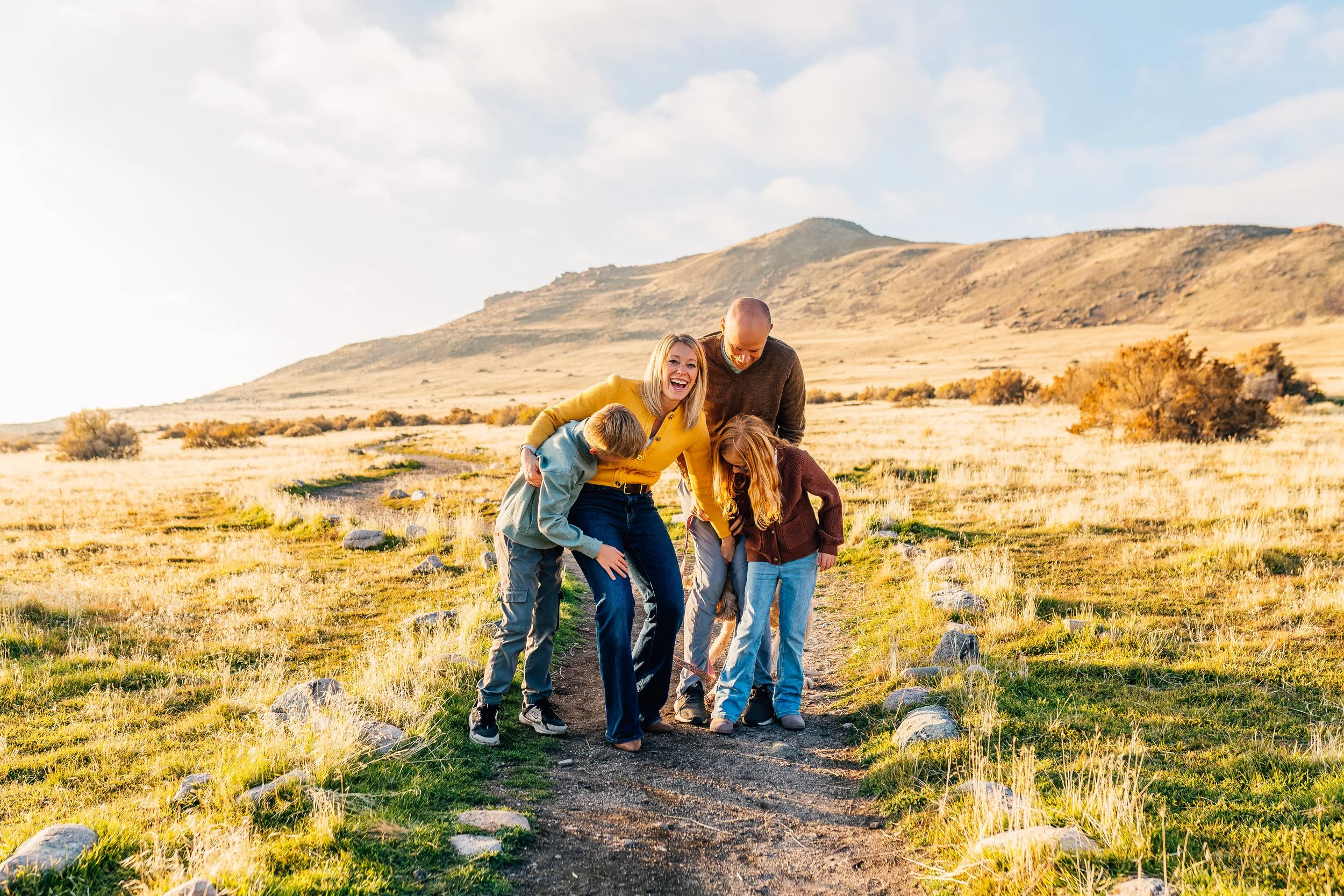
Why I Only Photograph Antelope Island in the Winter
Antelope Island is one of the most popular photography locations in Northern Utah, but winter is the only season I photograph there. In this blog, I explain why winter sessions at Antelope Island offer the best experience for family photography, couples photography, and documentary-style sessions. From fewer crowds and cooler temperatures to softer light and dramatically fewer insects, winter on Antelope Island creates space for real moments without distraction. This post breaks down what families can expect from winter photography sessions at Antelope Island State Park and why this season allows for more relaxed, authentic images that reflect connection instead of chaos.
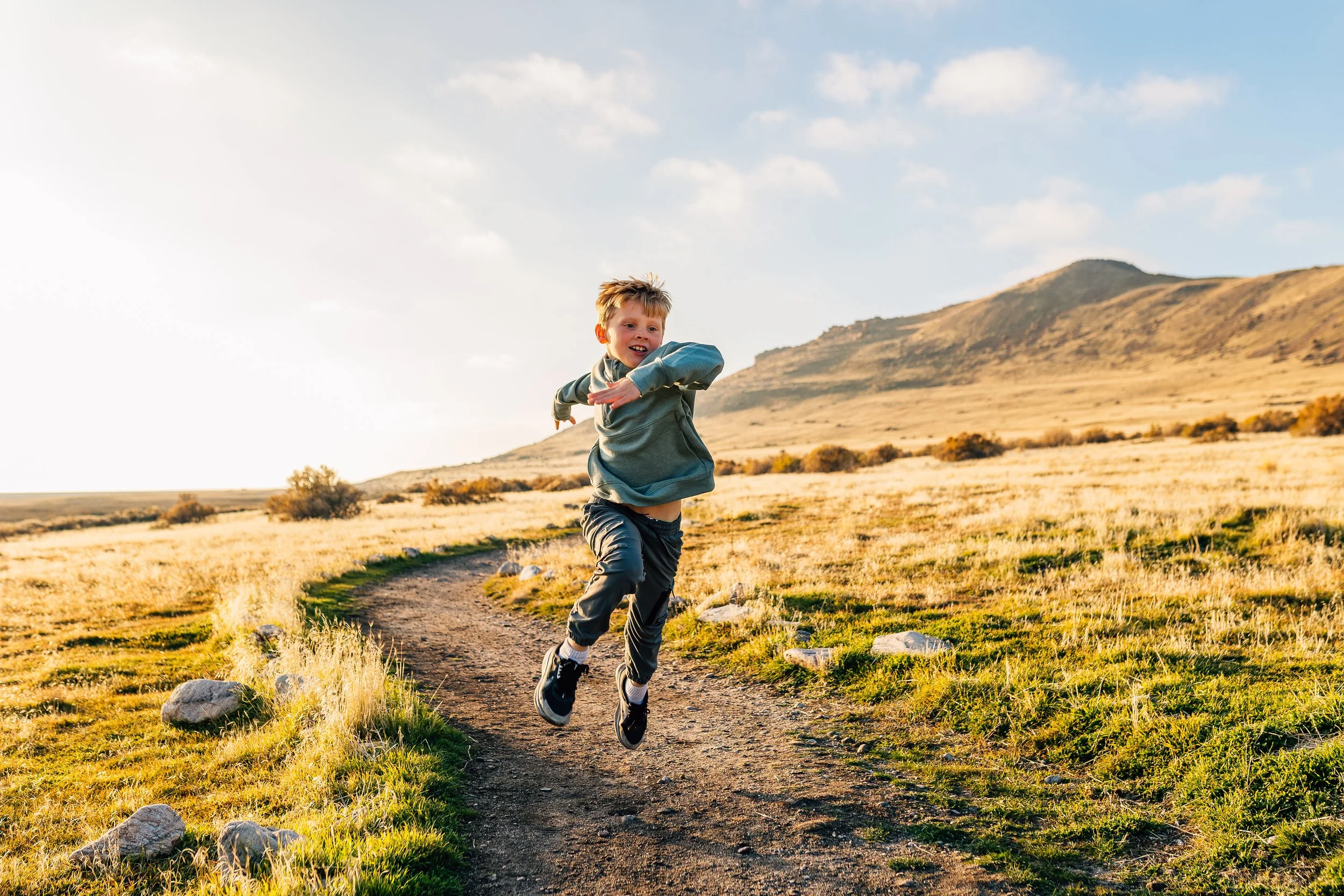
Child jumping on a trail during a winter family photo session at Antelope Island in Utah
Antelope Island is one of those locations that shows up on a lot of wish lists for family photos in Northern Utah. And it deserves the hype. But after years of photographing families there, I’ve learned that when you choose Antelope Island matters just as much as choosing it at all.
I photograph Antelope Island regularly, but very intentionally. I only recommend it during the winter months for photography. Not because it isn’t beautiful the rest of the year, but because winter is when this location actually works best for real families and documentary-style sessions.
Here’s why.
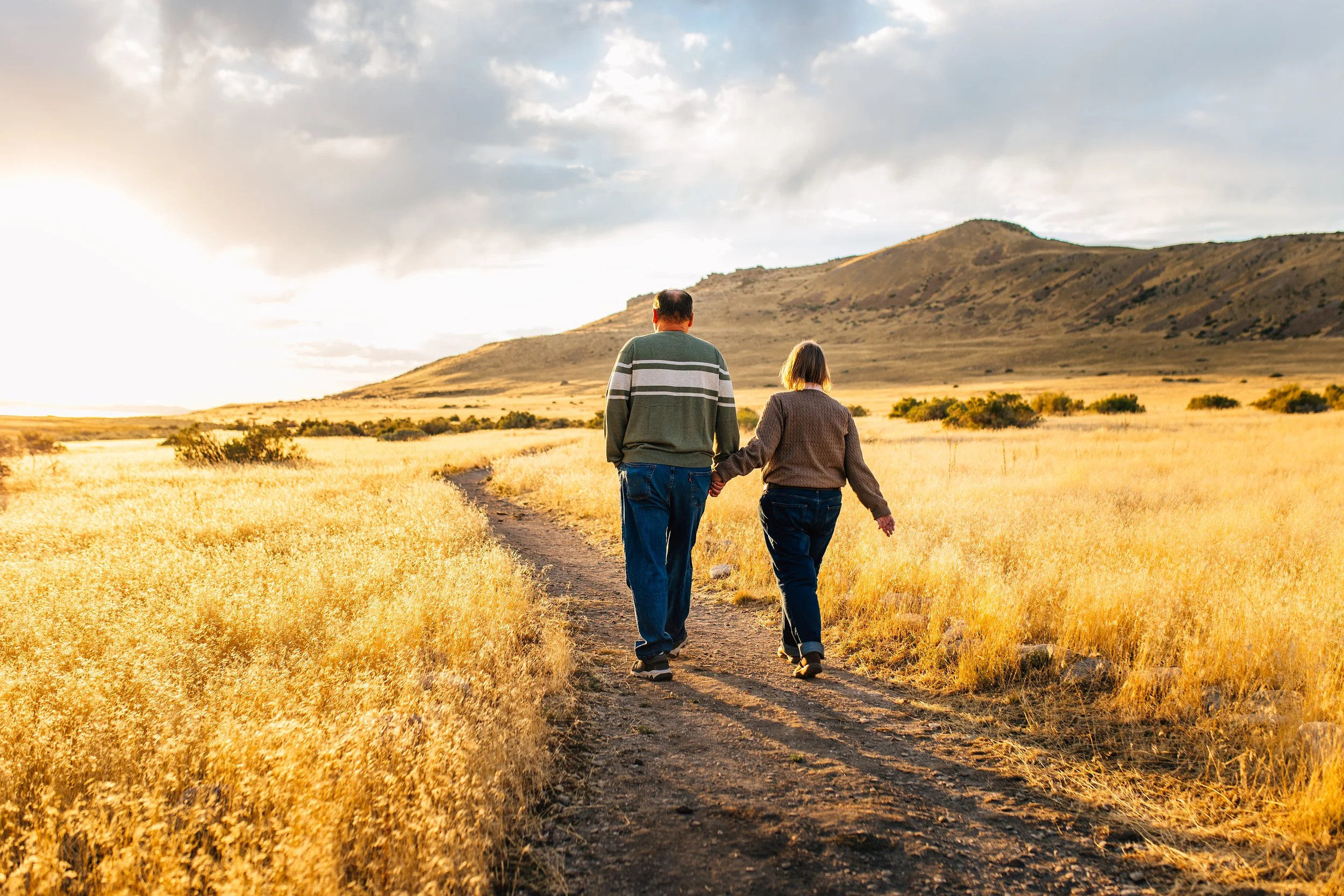
Winter at Antelope Island means fewer distractions and more space for families to just be together.
The bugs take over once it warms up
This is the part no one likes to talk about.
As temperatures rise, Antelope Island becomes home to FIRST no-see-ums, and then mosquitos. During peak season, they aren’t just annoying. They actively interfere with your session. Kids get overwhelmed. Parents get distracted. Everyone wants it over quickly.
It’s bad enough that there’s an actual notice at the ranger station when you enter the park stating no refunds due to no-see-ums. Bug spray doesn’t stop them. Once they’re out, they’re just… there.
Winter solves that problem.
Cold temperatures keep the bugs away, which means family photo sessions feel calm instead of chaotic. Kids can explore. Parents can relax.
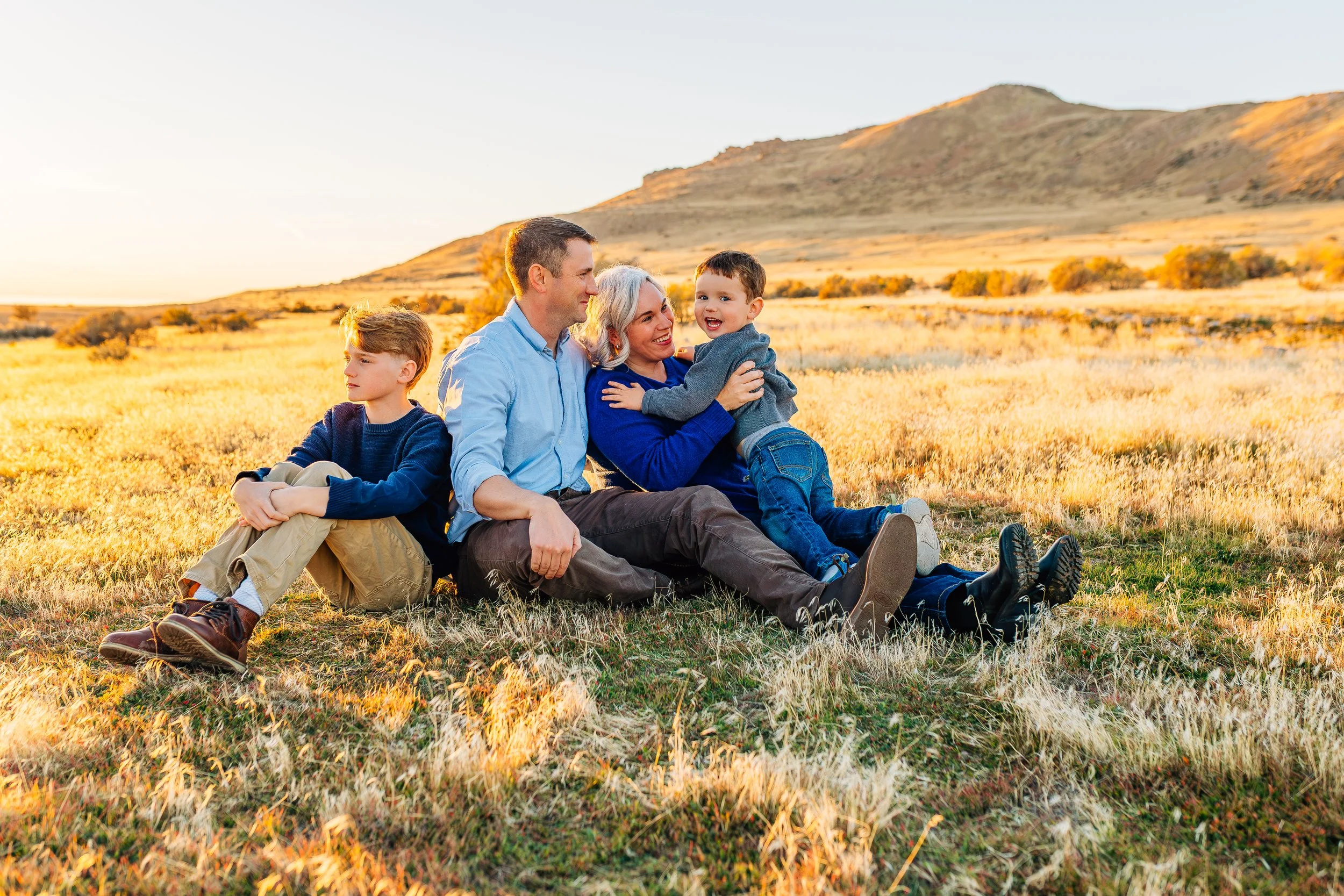
Winter sessions at Antelope Island allow families to slow down and settle into the moment.
Winter light supports a documentary photography style
Winter light at Antelope Island is softer and lower in the sky. It’s less harsh and more forgiving, which matters when the goal isn’t stiff posing but real connection.
For documentary-style family photography, winter light allows moments to unfold without interruption. There’s less squinting, fewer blown highlights, and more room for subtle interactions.
This is one of the reasons I consistently recommend Antelope Island for winter sessions to families in Weber County, Davis County, and Salt Lake County who want photos that feel real.
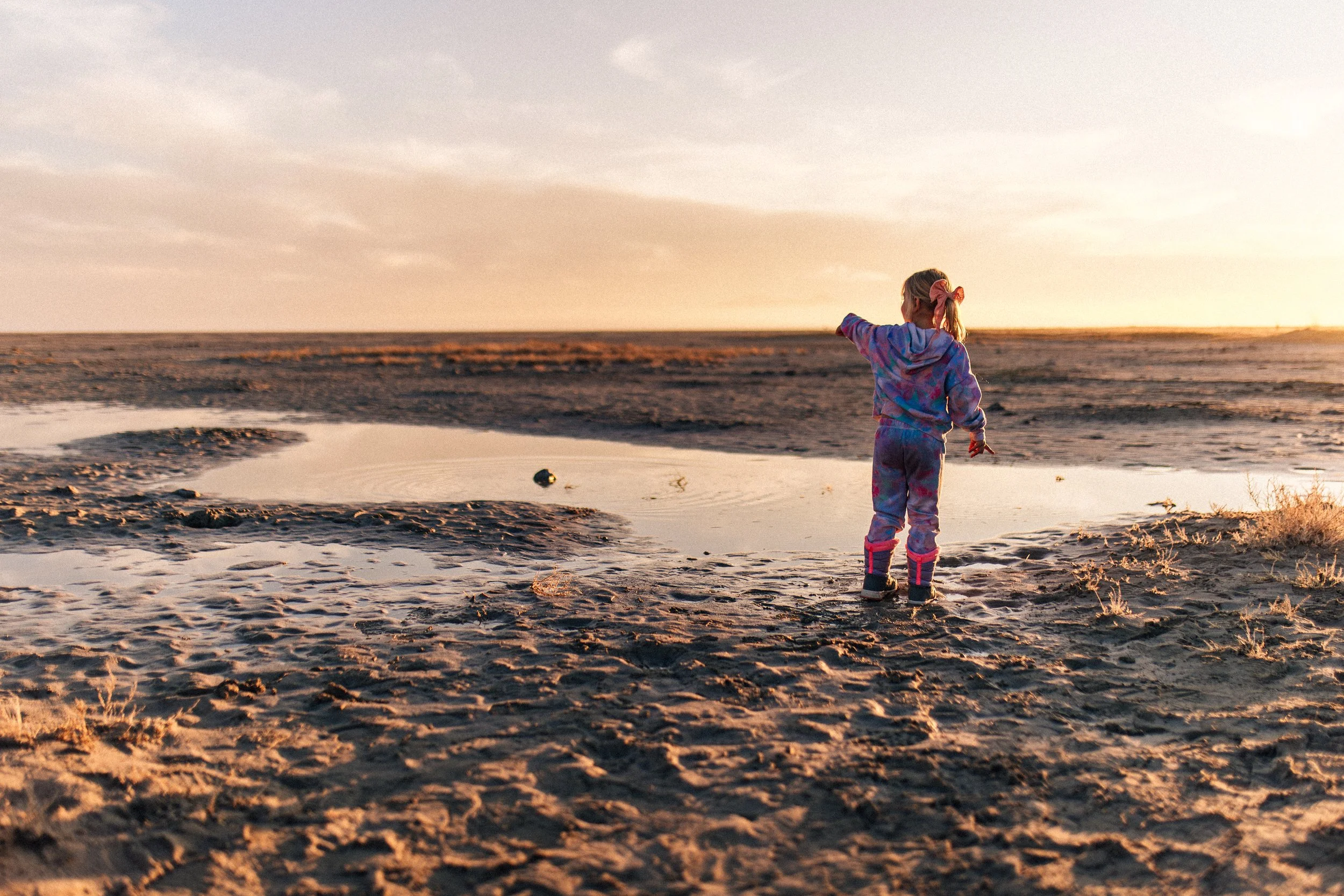
Letting kids explore instead of directing every moment.
Earlier golden hour works better for families with kids
In the summer, golden hour at Antelope Island can be late. Often close to 8 pm. For families with young kids, that timing alone can make a session stressful.
Winter sessions take place earlier in the afternoon or early evening. Kids are more regulated. Parents aren’t racing bedtime. Energy is better across the board, and it shows in the final gallery.
When families feel comfortable, documentary photography thrives.
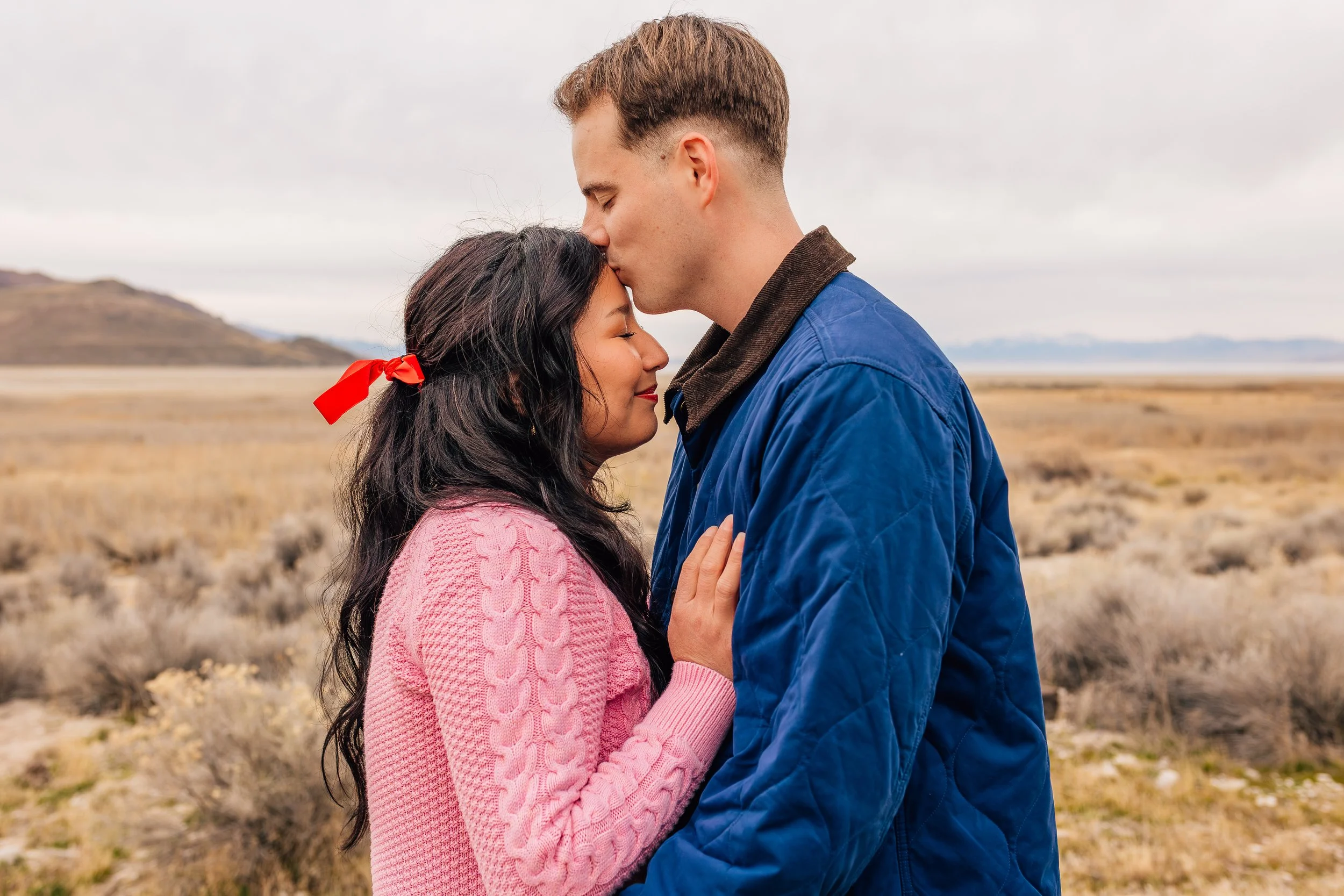
Connection matters more than posing.
The winter landscape feels quieter and more expansive
Winter strips Antelope Island down to its simplest form. Muted grasses, open shoreline, snow-dusted mountains, and the Great Salt Lake stretching endlessly behind it all.
There’s less visual clutter and more sense of scale. The landscape supports the story instead of competing with it. For family photography, this creates images that feel grounded, cinematic, and timeless.
This quieter environment is especially well suited for families who want their photos to focus on connection rather than scenery doing all the talking.
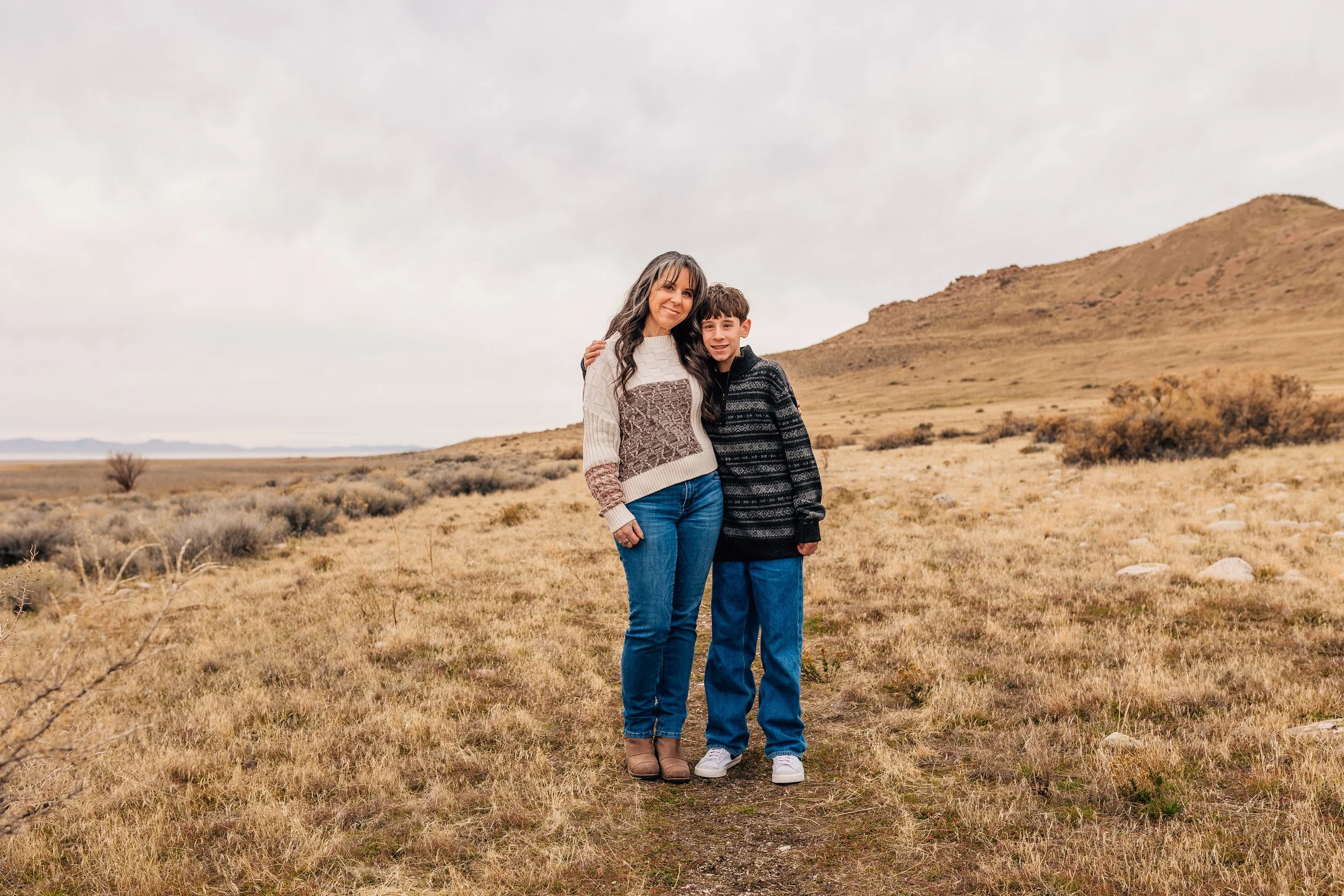
Winter family sessions at Antelope Island allow space for connection.
Fewer crowds make sessions more relaxed
Antelope Island is a popular destination, especially during warmer months. Summer often brings more traffic, more people, and more distractions just outside the frame.
Winter slows everything down. Fewer visitors mean more freedom to move, explore, and let kids be kids. Sessions don’t feel rushed or interrupted, which is crucial for capturing authentic moments.
For families across Northern Utah, this makes a noticeable difference in how the session feels and how the photos turn out.
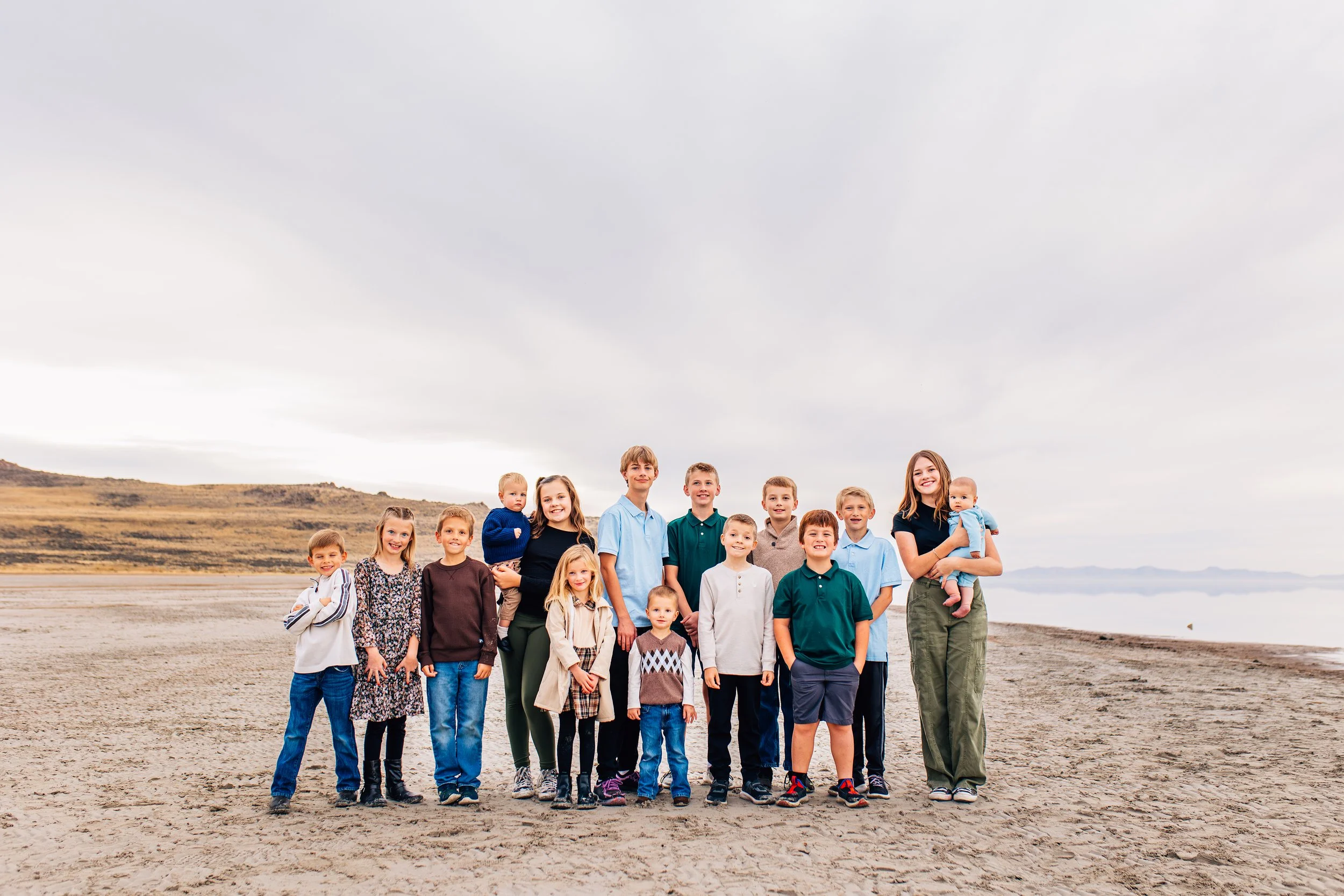
Real families, real moments, no rush.
Why I recommend Antelope Island only in winter
This isn’t about restrictions or rules. It’s about experience and intention.
After photographing families from Weber County, Davis County, and Salt Lake County at Antelope Island in every season, winter is when I consistently see the best results. Families are more comfortable. Kids are more themselves. The light, the landscape, and the pacing all work together.
If Antelope Island has been on your list for family photos, winter is when I recommend it most. And if you’re unsure whether it’s the right fit for your family, I’m always happy to talk through options and locations that align with your vision.