Photographing Families Near Saltair and the Great Salt Lake
Documenting a Changing Lake and Why It’s Worth Protecting
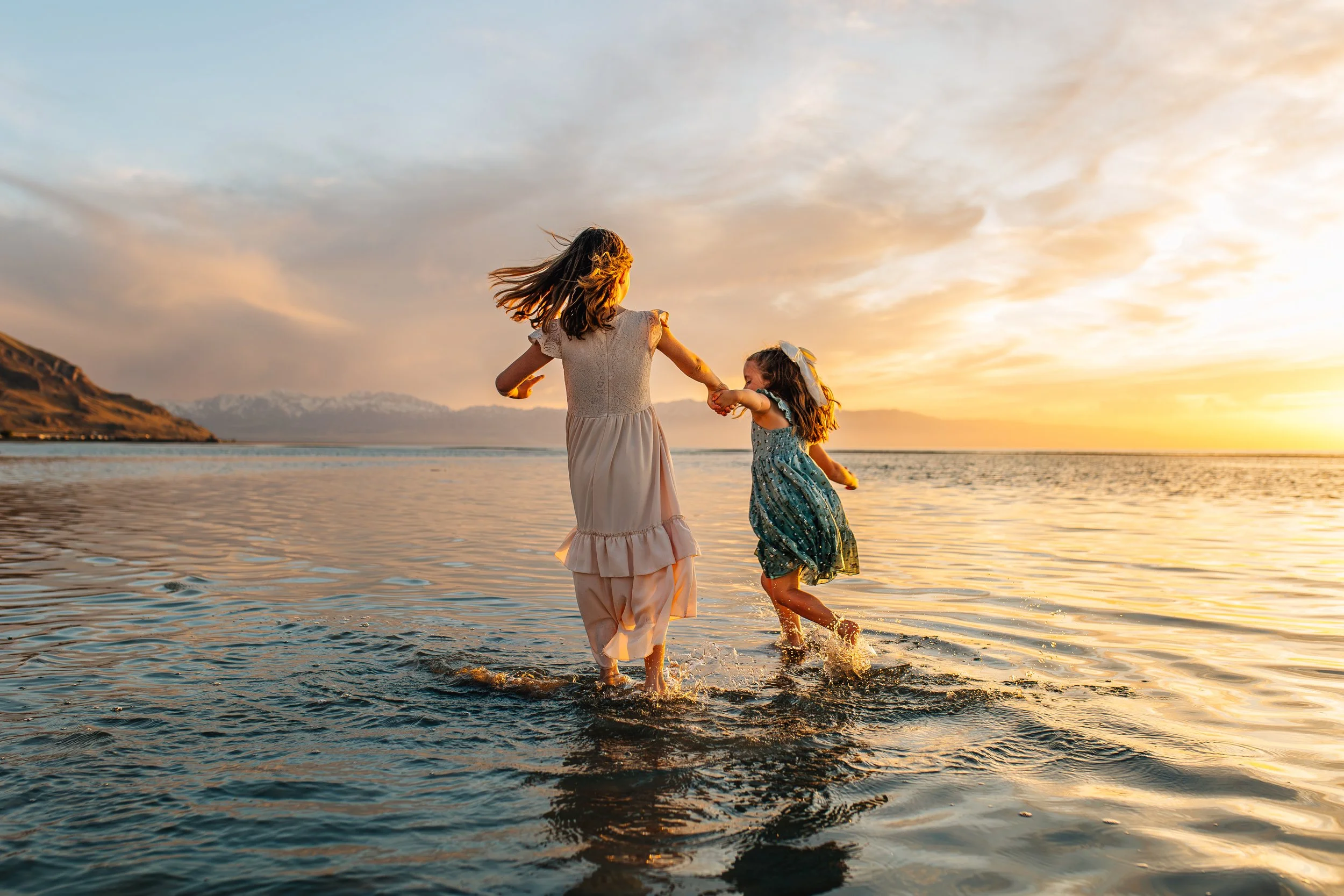
The Great Salt Lake shoreline as it exists now.
There’s a stretch of shoreline near Saltair that feels different from most places people choose for family photos. It’s open and quiet, a little stark, and deeply beautiful in a way that isn’t trying to impress anyone.
I photograph families here because it tells the truth. About the landscape. About time. About how small we are inside something much bigger.
And also because this place is changing.
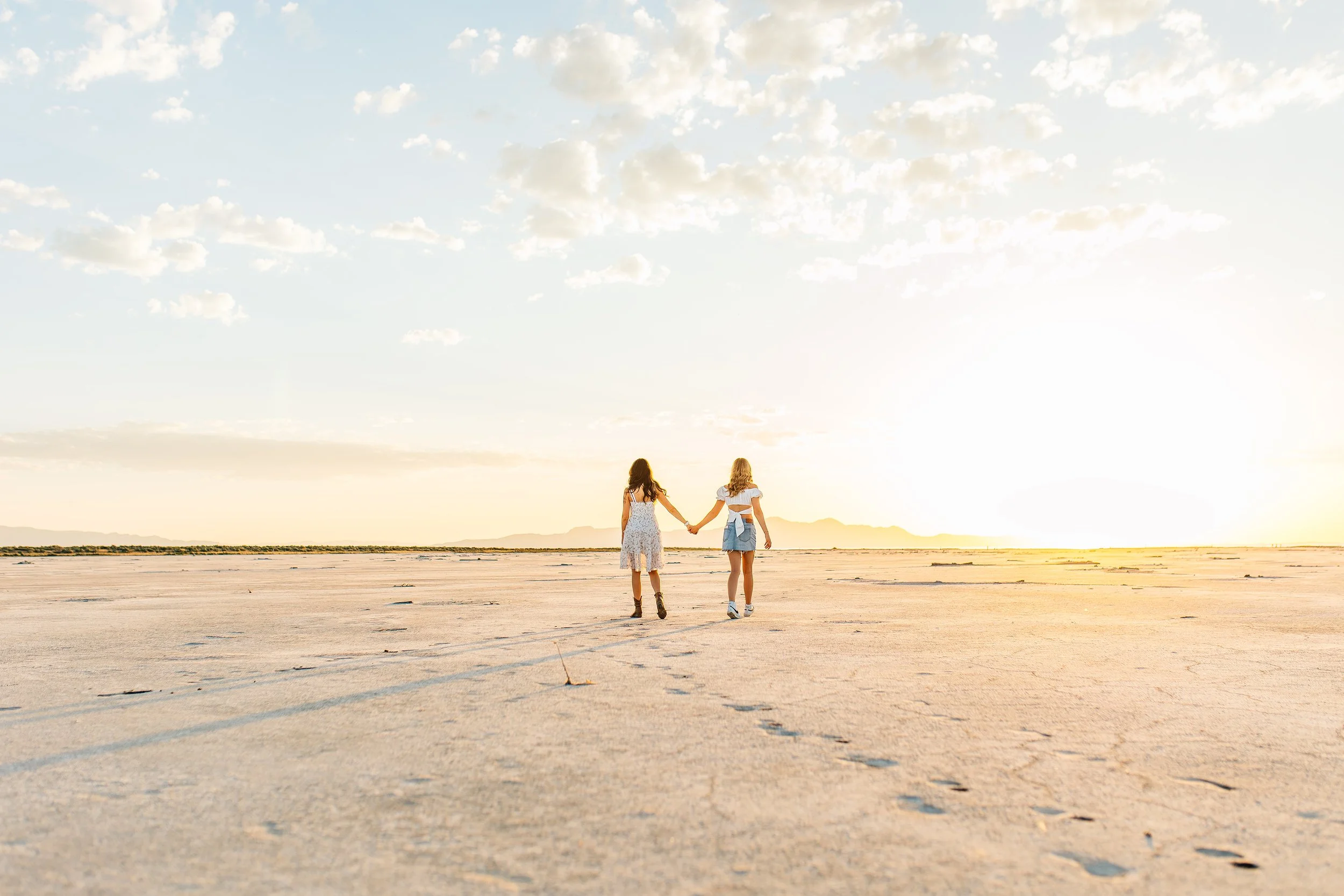
A moment held in a landscape that is slowly disappearing.
Saltair isn’t just a backdrop
Saltair used to be loud. It was a destination, a gathering place, a place people came to escape the heat and be entertained. Over time, the lake shifted, the crowds disappeared, and what remains is something weathered and stripped back.
That history matters, even if you don’t know the dates or the details.
You can feel it in the building. In the emptiness around it. In the way the shoreline stretches out farther than you expect. Photographing near Saltair isn’t about recreating what it once was. It’s about acknowledging what it is now.
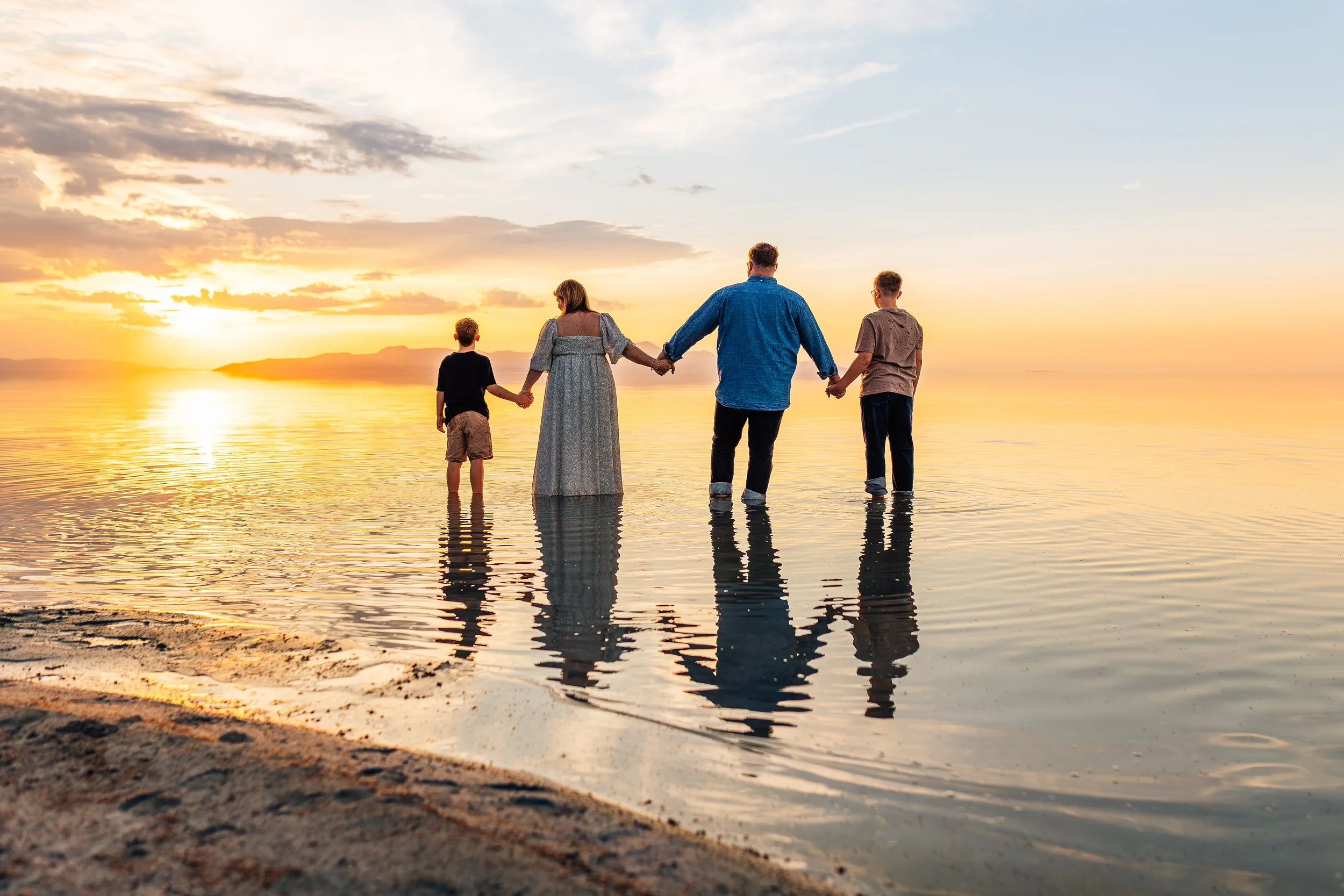
Together at the edge of the Great Salt Lake.
The Great Salt Lake is drying up, and you can see it
This isn’t abstract when you’re standing there.
The waterline sits farther away than it used to. The ground cracks in places where water once was. You walk longer distances just to reach the edge of the lake. Sometimes you’ll notice dead birds scattered in the sand, casualties of an ecosystem under stress.
It’s sobering. And it’s real.
Photographing here feels less like creating something staged and more like documenting a moment in time. The lake won’t always look like this. And pretending otherwise doesn’t serve anyone.
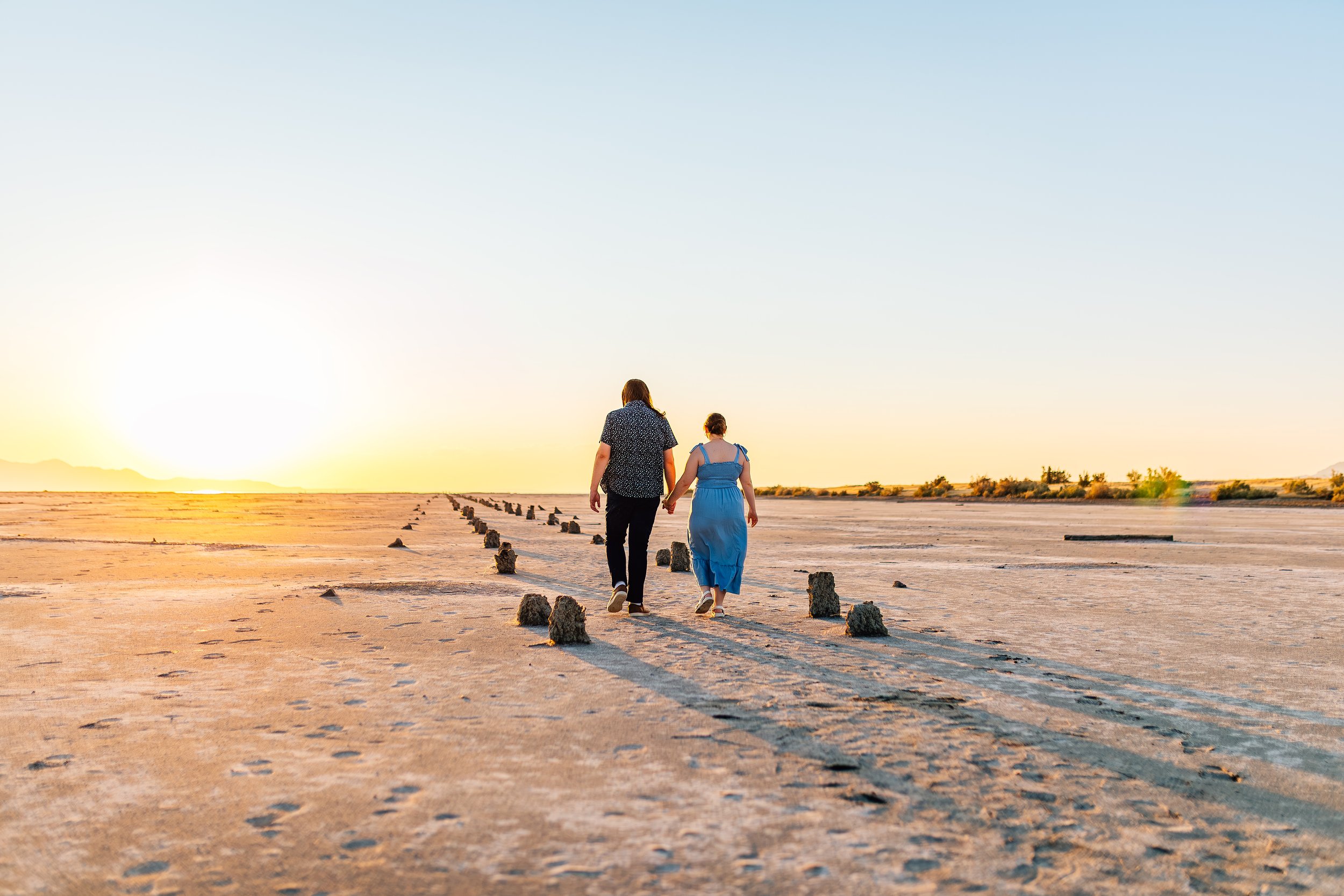
Evidence of how much the Great Salt Lake has receded.
Beauty and discomfort exist together here
This location isn’t polished. And that’s the point.
There are brine flies when conditions are right. They don’t bite, but they show up in numbers, clinging to shoes and skin and reminding you that this place is alive and struggling at the same time.
There’s wind that lifts hair and clothing. There’s distance to walk from parking areas to where sessions actually take place. There’s uneven ground and silence and space.
All of these things are connected to the lake itself. To its changing levels. To its fragile balance.
And yet, somehow, it’s still beautiful.
The light is incredible. The sky feels endless. The scale of the landscape makes even quiet moments feel important. Kids wander. Families slow down. The environment asks less of you and gives more in return.
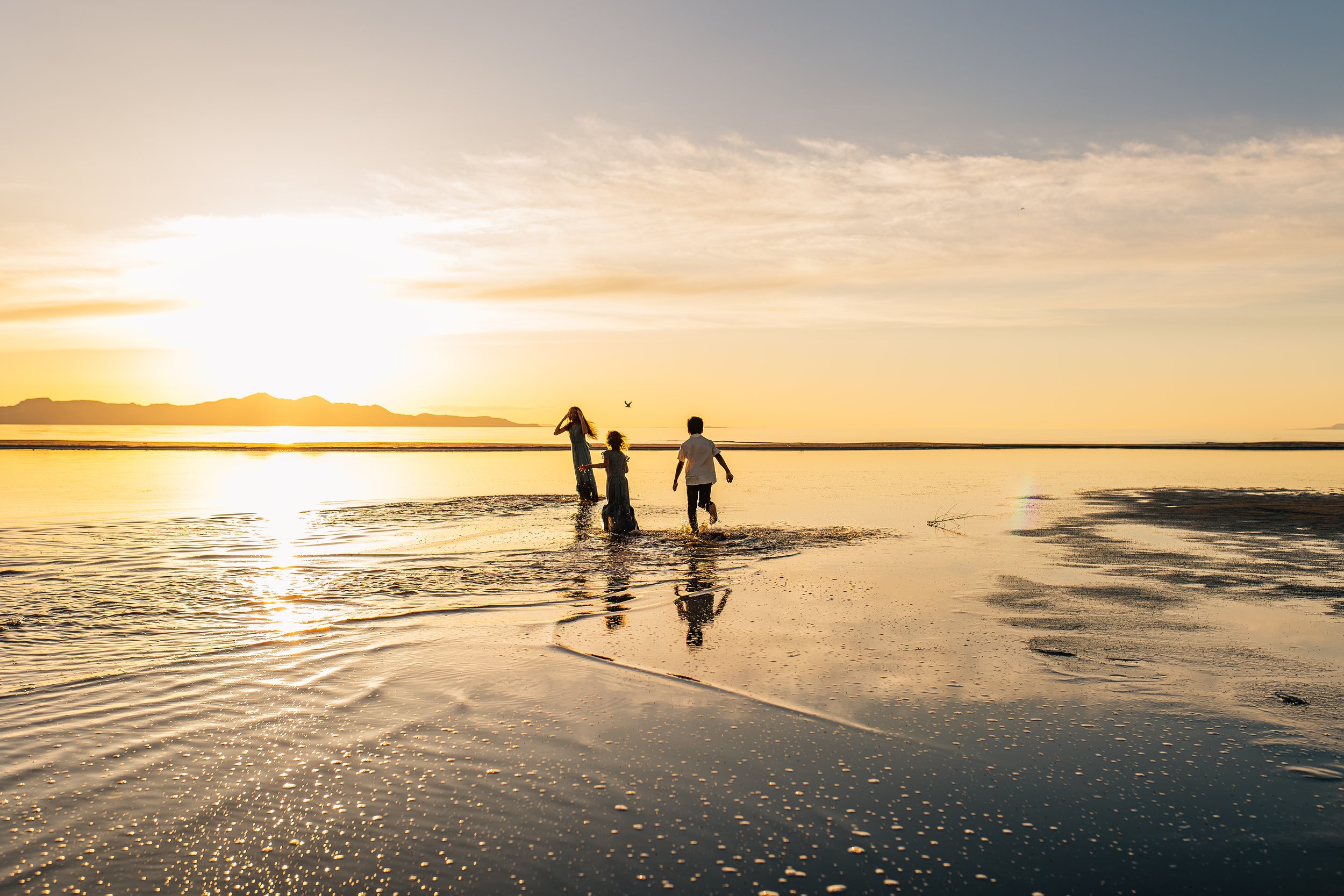
Moments of play exist alongside a changing lake.
Why I still photograph families here
I don’t bring families here to ignore what’s happening to the lake. I bring them here because of it.
There’s value in remembering what a place looks like now. In letting kids explore a shoreline that may not exist in the same way years from now. In standing inside something imperfect and real instead of chasing a version of beauty that feels disconnected from reality.
Enjoying this place and caring about its future are not opposites. They belong together.
If anything, photographing here has made me more aware of how much the Great Salt Lake matters. Not just visually, but ecologically. It supports wildlife, air quality, and the balance of this entire region. Saving the lake isn’t an abstract idea. It’s about preserving something that still has so much to give.
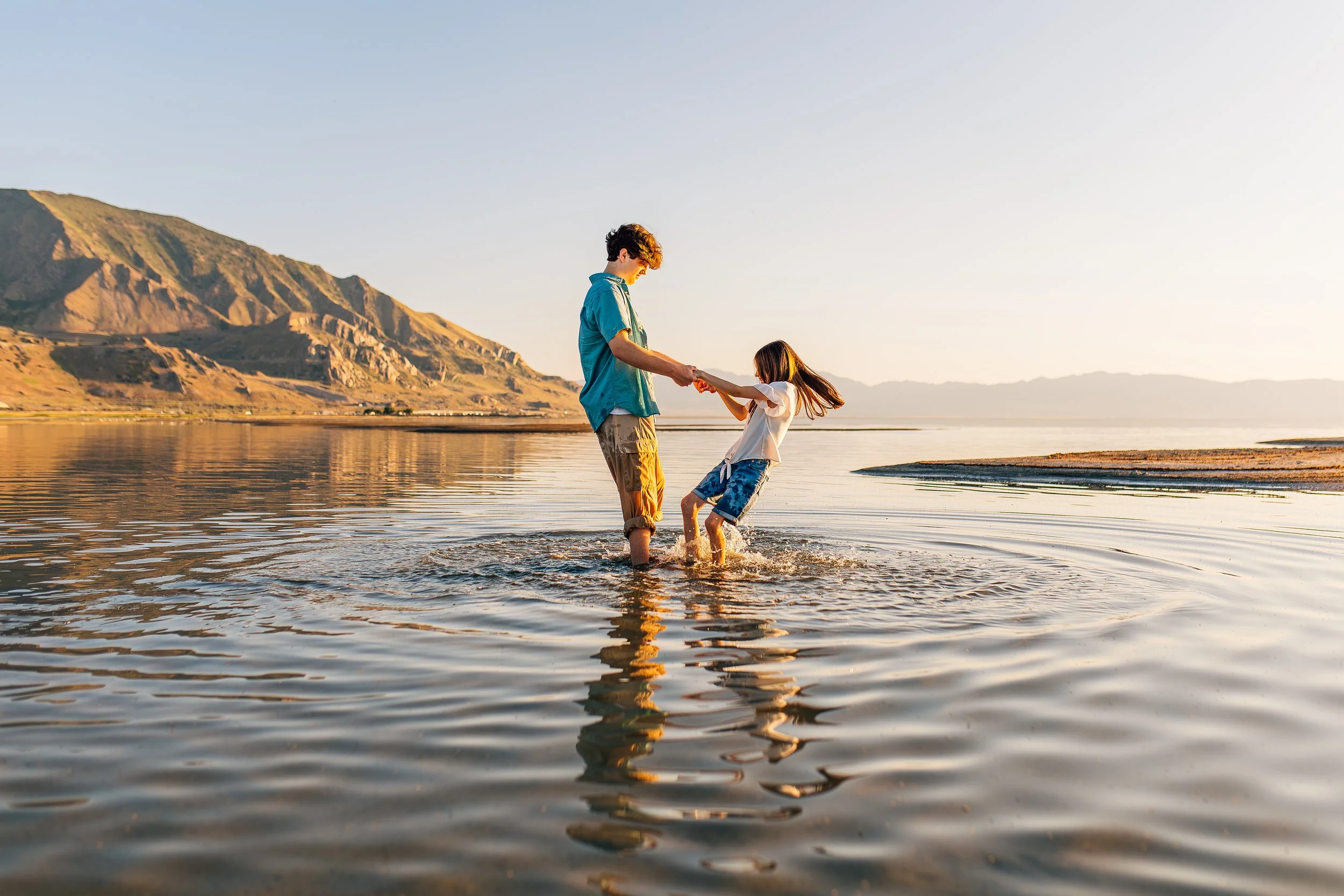
Moments of wonder still exist here.
What to know before choosing this location
This isn’t the easiest location, and I think that honesty matters.
There may be flies depending on the season and conditions. There may be a longer walk to reach the shoreline. You may see evidence of a changing ecosystem. This place asks for awareness and respect.
But for families who are open to that, who want photos that feel grounded and honest, this shoreline offers something rare.
It’s not about perfection. It’s about presence.
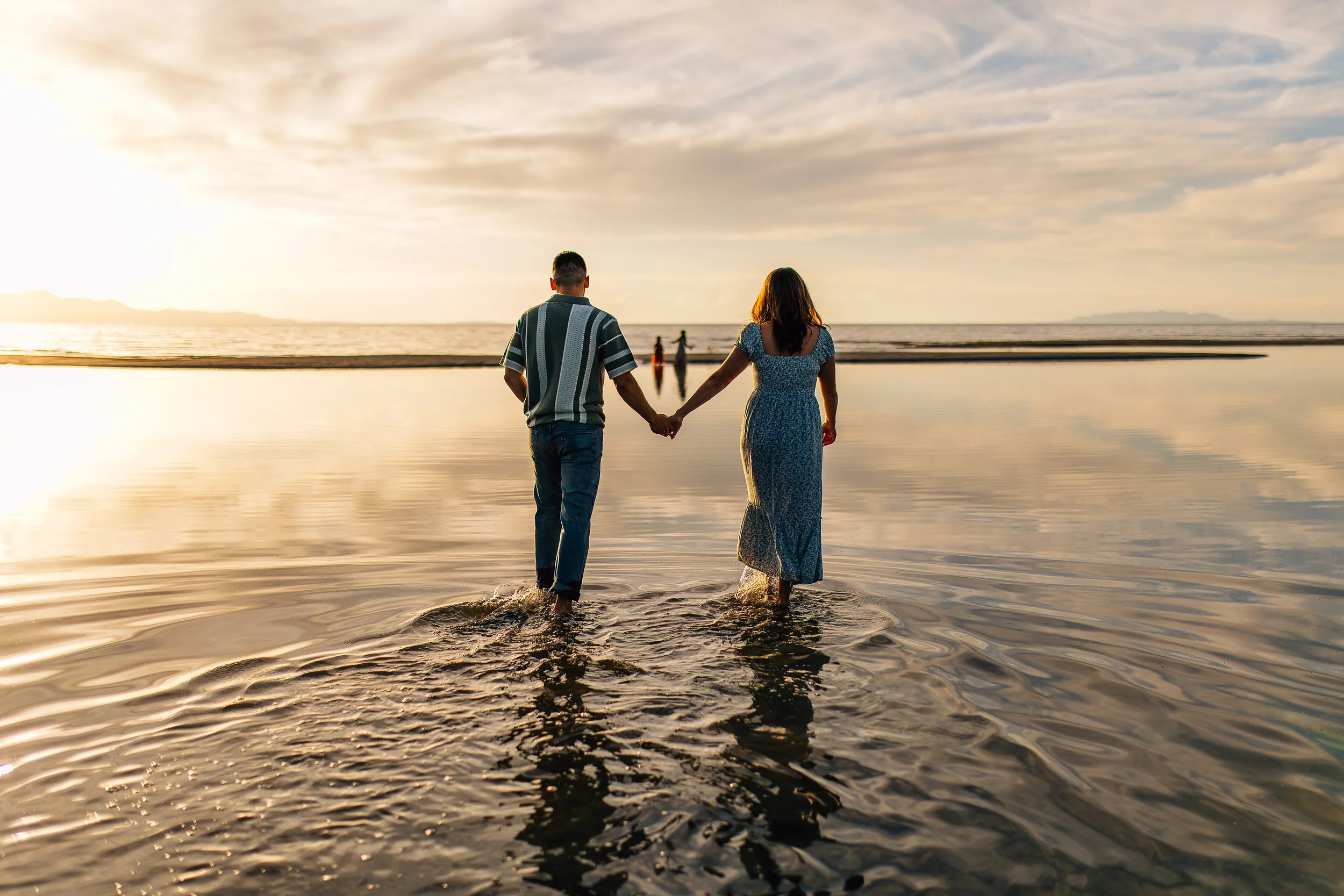
Family photos on the Salt Lake.
Holding space for what still exists
Photographing families near Saltair and the Great Salt Lake feels like holding space for contradiction. For beauty and loss. For joy and awareness. For the act of documenting something while also hoping it survives.
We can love this place and still acknowledge its fragility. We can create meaningful images here while also caring deeply about what happens next.
And maybe that’s the point.
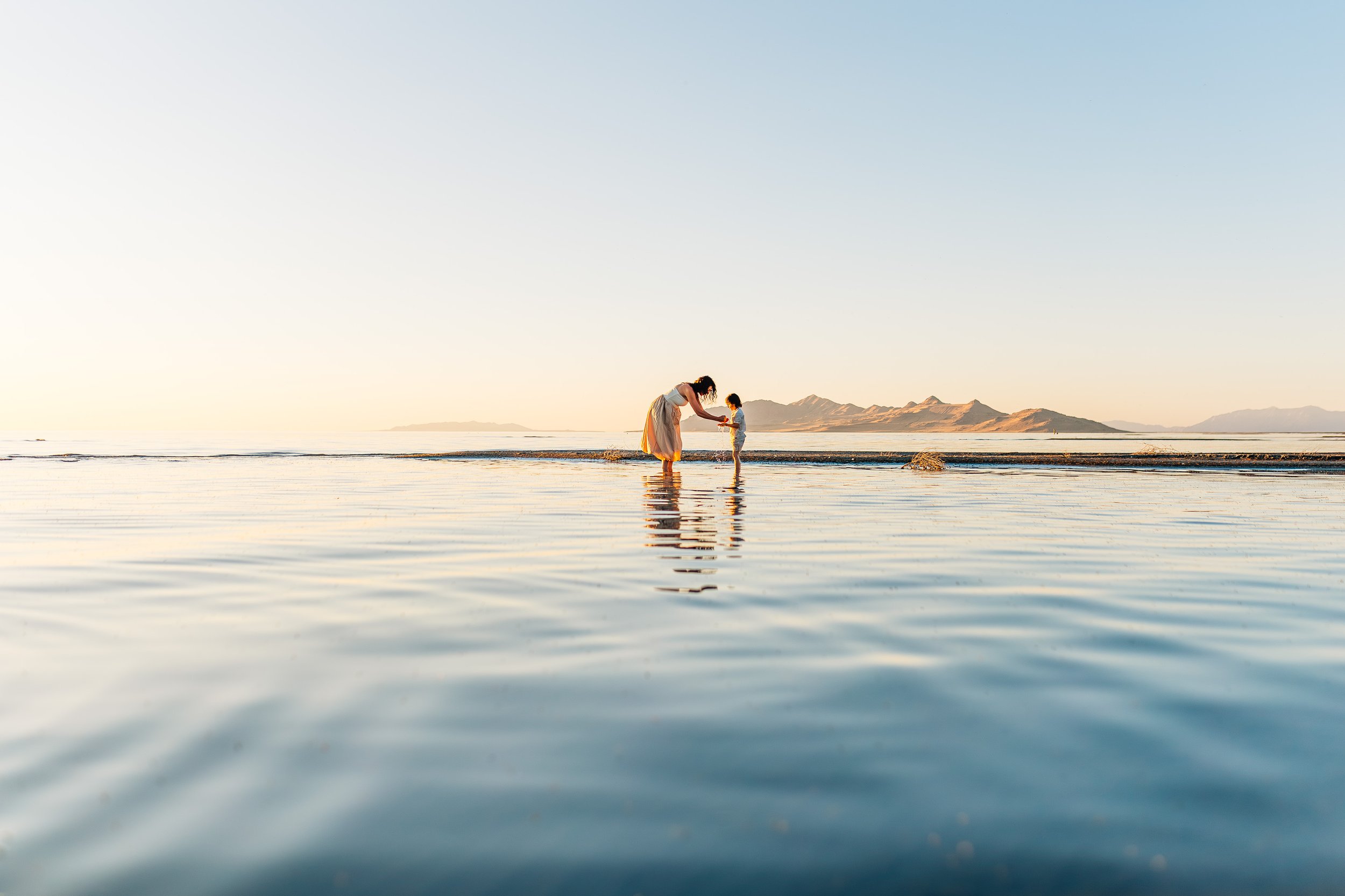
Moments of connection at the Great Salt Lake.
A Closing Note
This place is beautiful.
And it’s also changing.
Photographing the Great Salt Lake isn’t just about light, reflections, or wide open space. It’s about paying attention. About noticing what’s still here, and what we’re at risk of losing.
If we want future generations to experience this lake the way we have, it can’t stop at documenting it. It has to turn into action.
That means asking more of our government leaders. It means supporting organizations doing the work to protect the lake. And it means staying informed, even when the reality feels uncomfortable.
The Great Salt Lake matters. To our environment, our health, our wildlife, and our communities. It’s worth showing up for.
Learn More & Take Action
If you’re feeling called to do more, Save Our Great Salt Lake is a great place to start. They focus on advocacy, education, and real solutions aimed at protecting the future of the lake.
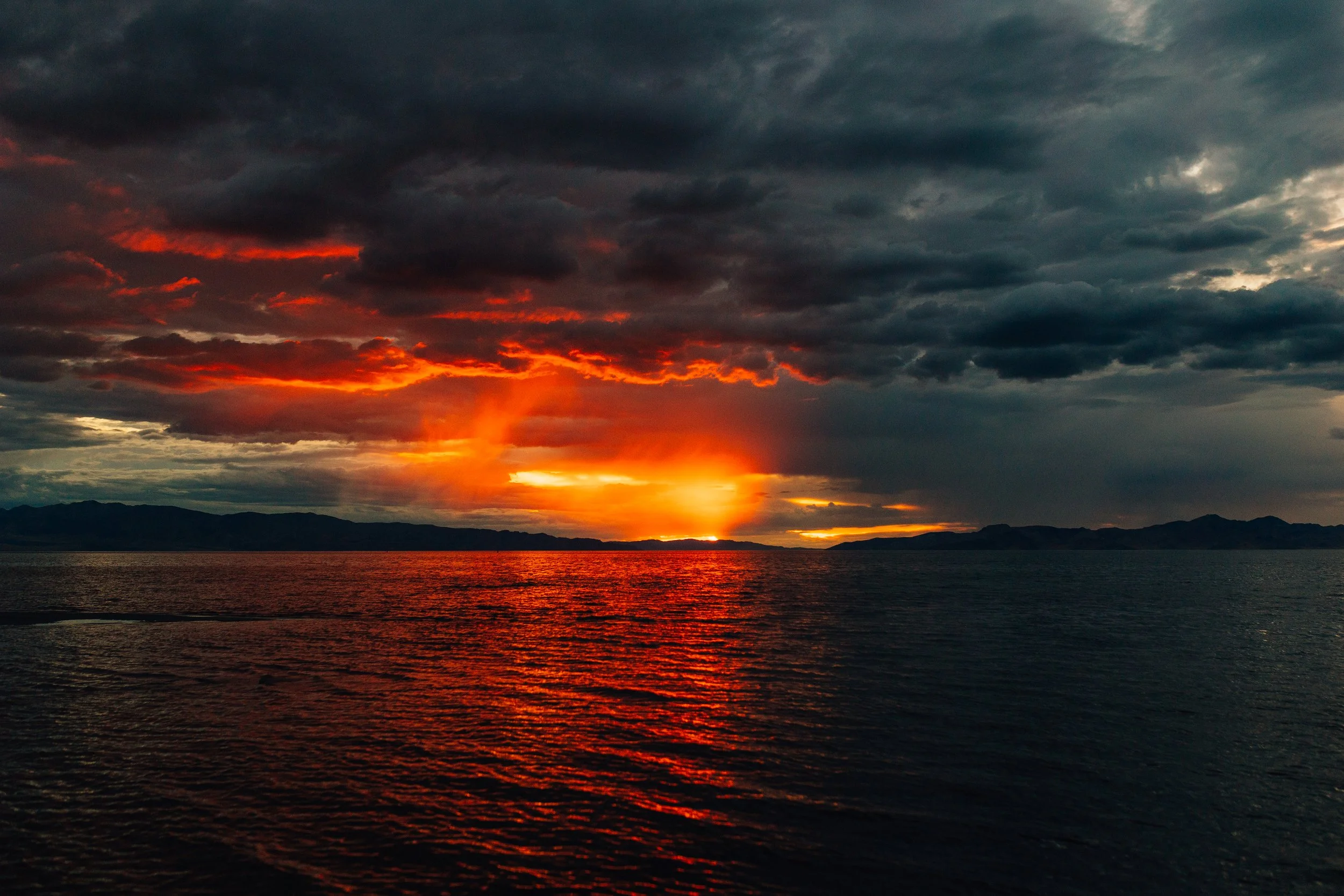
A changing sky over a changing lake.